
Why Do I Need to Prune My Trees in the Winter?
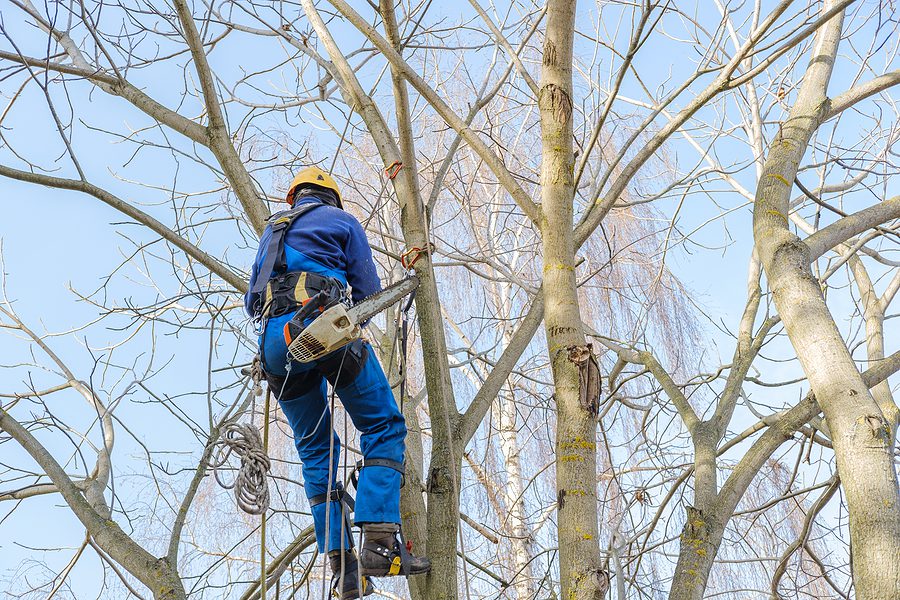
Winter is the best time to prune deciduous plants. Don’t be discouraged by a cold day in the garden, because that will get the sun out and let you go out of your pruning tools and inspect your trees and shrubs.
Tree Pruning begins at dormancy when trees and shrubs are in dormancy and it can begin pruning after the buds start to blossom. From mid-November to mid-March, you can shape and thin your deciduous plants in preparation for spring season. Although evergreens will never fully mature fully, they must be pruned in the growing season as they never do and tip burn may occur when they are trimmed in the winter.
It is much easier to prune without leaves because you see the branching of the plant on your first sight.
In winter, viruses can be transmitted in the same plant and not spread across itself; insect reproduction occurs less likely in winter, and insects live on limbs that were injured by cutting. And, since most gardening tasks take place in the short, intense growing season, some tasks are useful in the winter – some of them may actually do so.
Have a goal when you prune a plant
Think about what you want to do to the tree or shrub that you’re pruning. Most deciduous tree pruning should keep a natural style with low-branching trees not limbed up, tall shrubs not sheared or topped with short ends and the natural shape of a plant maintained. The purpose here is to emphasize the natural beauty of the plant and, in fact, with a little creativity, well, it looks like you never did anything at all.
Disinfect your tools and remember safety
Although not a particularly important step in the growing season, cleaning tools used with rubbing alcohol and water, which measures between 2 tablespoons and 1 cup of water, protect them from spread of diseases from cut to cut as you prune.
When you prune, wear something protective; it’s possible you will have poked in the eye. And know your limits. Tree work can cause serious consequences. If you need to prune large trees or if you want to use a chainsaw, you may need professional help from a certified arborist.
Remove undesirable branches
First, remove dead or diseased wood wherever it is on the plant. Next, take out all suckers and water sprouts. Suckers are straight, unbranched stems emerging from a tree’s base. Water sprouts are similar stems, but grow from right angles to the branches. To succeed, suckers or water sprouts will be able to grow into natural-looking branches.
Remove crossing or rubbing branches
Start at the largest branches and move up to smaller branches. It may come when you break this rule, for example, when you leave a large crossing limb that would disfigure the tree if removed. If trees were properly pruned when they were young you never would have to do this.
Thin out the tree or bush canopy
The branches that make up the dense mass of a tree or shrub can be cut off at the center and moved onto the exterior. To improve the flow of air through the branches, and to add dimension to the plant’s structure, you apply pressure against the branches.
If there is more than one-quarter of a plant in a season, it is a waste of time to remove more than one quarter in a season, as this encourages the emergence of sucker growth. Thinning is particularly important for crab apples and hawthorn trees that have fungal diseases.
Take long breaks and take a step back and look
Could the tree balance itself? Would it look perfectly symmetric? You don’t want to hollow out the center. You can go back and take it off but cannot put it back on.
Always prune back to a bud or branch
Never leave open ends of the stub or open ends that were shearing off the top of a plant. Open ends may produce dense horizontal sucker-like growth that does not encroaching on the natural branching rhythm, or they can lead to dieback and disease. Cut an unwanted branch above a bud, since new branches will emerge from that bud. At least in general the bud should be facing outward, so the branch will begin to grow towards the outside of the plant.
Assuming the limb is removed from a trunk or other large branch, it shouldn’t be cut flush to the trunk. The natural collar should remain on the trunk so the wood heals right.
Look for insect problems
Winter is particularly good for the egg masses of tent caterpillars, moths. Handle the pesticide or pruning out to treat insects in spring.
Look for signs of disease
As you conduct a close examination, use these areas to look for unusual swelling, open lesions or darkening on the branches, such as canker and disease.