
What are the Best Strategies for a Green Lawn this Spring?
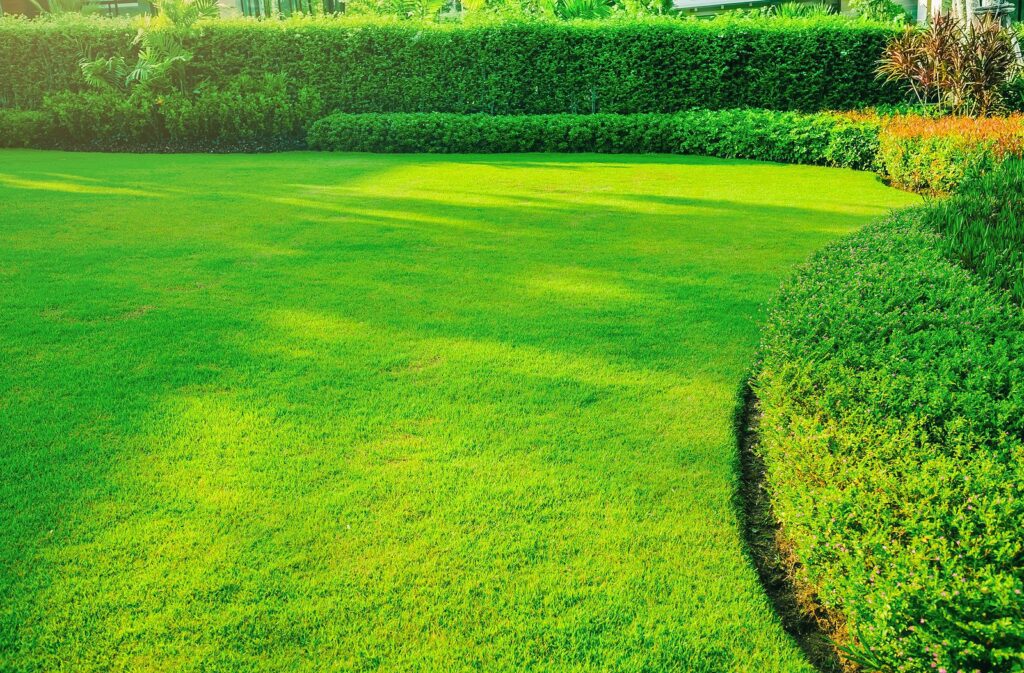
There’s no such thing as a good lawn without good lawn care. Achieving and maintaining green grass all starts with understanding your grass’ basic needs and supplying them regularly.
The best news is that taking your lawn from drab to dazzling isn’t as difficult as you might think.
Many of the best steps you can take are simple routine maintenance like mowing your grass to the proper height, watering your lawn approximately 1 to 1.5 inches each week, and fertilizing correctly and seasonally.
And while proper watering, fertilizing, and mowing go a long way, improving your lawn’s health from the roots up will ensure your grass always looks its best.
Lawn Care Action Plan if You Just Don’t Have the Time
Don’t have time to dedicate to spring lawn maintenance? Leave your lawn care to the pros at R & S Landscaping. Skip weekend yard work and the hassle of DIY lawn care and we’ll send local lawn care professionals to help your lawn reach its full potential.
Clean up your yard’s lawn
Pick up dead leaves, branches, and debris left over from winter. Leaving too much debris on your lawn can suffocate your grass and lead to disease. Plus, cleaning up your lawn this spring will allow you to take note of any winter damaged areas that may need reseeding. Here’s what to do:
- Improve lawn circulation by raking all the leaves and twigs on the lawn from earch spring storms and winter storms.
- Remove any articles like tools, mowers, bikes or toys.
Inspect your lawn’s irrigation system
You’ll never get green spring grass if your irrigation system isn’t up to par. Before spring arrives and the growing season begins:
- Run each zone on your sprinkler system to make sure water coverage is even across your lawn
- Inspect heads, pipes, and hoses for leaks or damages
- Adjust sprinkler heads to prevent overspray onto sidewalks/driveways
- Replace broken sprinkler heads and sprinkler nozzle heads
Tune up your lawn mower
If your lawn mower breaks down, your lawn care will too. Make sure your mower is prepared for spring by doing these important maintenance checks:
- Sharpen mower blades. Dull blades rip grass instead of cleanly cutting it
- Change your mower’s oil and air filters
- Inspect and replace worn spark plugs
- Check tire pressure to ensure mower is cutting evenly
- Use good gas to avoid engine problems and carbon buildup later on
Pull weeds, weed seeds, and thatch
Weeds aren’t just unsightly — they steal nutrients your lawn needs to green up in the spring. Apply pre-emergent herbicides when your soil is between 50 and 55 degrees Fahrenheit for several days in a row.
Tip: If you plan on planting grass seed this spring, do not use pre-emergent herbicides as it will inhibit germination.
Test your lawn’s soil
Spring is the perfect time to have your soil professionally tested. Not only does the EPA recommend this practice, but most academics and lawn care professionals swear by it as well.
Testing your soil allows you to know exactly what your lawn needs. Fertilizing without a soil test guess based on assumptions. With a soil test you’ll know your soil pH level, organic matter, and soil type.
You’ll also know what nutrients may be lacking in your soil. To properly do the soil test, collect a few samples from your lawn and send them to your local Extension office for testing.
Depending on your soil’s pH level, you may need to add amendments such as lime, sulfur, or organic matter. These products are best applied in the fall.
Remove lawn thatch
Unhealthy grass has thick layer of thatch above soil and thin roots. Healthy grass has thick layer of soil directly connected to deep roots.
Thatch is the dead organic matter found between the tips of your grass blades and the soil surface. Thatch blocks water, nutrients, and air from getting to the soil and cause weak root development.
Lawns that have more than ½ inch of thatch should have it professionally removed. Or you can buy a dethatching tool and remove it yourself!
Timing: Since dethatching can be very stressful for lawns, make sure to dethatch your lawn when it can recover the quickest. Dethatch warm-season grasses in late spring/early summer and cool-season grasses in the fall.
Aerate your lawn
Once your lawn is dethatched, it’s time to aerate your lawn. Aerating your lawn allows water, nutrients, and air to reach your grass’ roots by eliminating soil compaction.
There are many methods to aerate your lawn. These methods include liquid aeration, spike aeration, and core aeration. Of the three methods, core aeration is the most popular and effective method.
While spike aeration simply punches holes into the soil, core aeration removes plugs of soil to allow for increased airflow.
Timing: Warm-season grasses should be aerated in late spring to early summer and cool-season grasses in the fall. Once again, if you missed fall’aeration season and your lawn could use some help now is your second-best option.
Since both dethatching and aerating are stressful lawn procedures, it’s best to leave them to lawn care professionals.
Overseed your lawn
Winter can be tough on your lawn. If you’ve noticed winter damage or bare spots on your lawn, now’s the time to encourage new growth with grass seed.
By overseeding your lawn, you’ll fill in thin patches with thick, luxurious growth. Grass also crowds out weeds, making it less likely for weeds to overrun your lawn.
The best time to overseed your lawn is right after aeration. The seedlings will reach the most soil possible when there’s less thatch and compaction.
Fertilize your lawn
Spring fertilizer is the magic pill that gives your lawn essential nutrients to grow thick and green. Think of fertilizer as vitamins for your lawn.
While fertilizer is typically applied after dethatching and aerations are completed, if you plan on overseeding you’ll have to be cautious about fertilizer and seed combination.
Experts recommend waiting one whole month after overseeding before applying a nitrogen fertilizer. If your soil test recommended phosphorus, apply it before you overseed.
Timing: Unruh says that while fertilization is most important during the fall for cool-season grass, if your lawn is lacking and needs a pick me up now is better than never.
For warm season grass you can fertilize once it has fully greened up. Apply your second feeding during mid to late summer.
Water your lawn correctly
Too little or too much water can destroy your lawn. Drought stress weakens your lawn and leaves it susceptible to annual lawn pests.
On the flip side, too much watering can promote fungal disease, lawn pests, and cause your lawn to grow shallow roots.
Need some watering tips to maintain a green lawn this spring? Follow these tips:
Water your lawn before 10 a.m. (try to get it done before 8 a.m.) Early morning watering allows your lawn to soak up water before the sun has a chance to evaporate it.
Don’t water unless your lawn needs it. Watering your lawn just because it’s Tuesday morning is wasteful.
Water less frequently in early spring. During this time, less water evaporates from cool temperatures and Mother Nature gives your lawn a little help with spring rains.
Know how much water your lawn needs. Cool-season grasses need around 1-1.5 inches of water per week, while warm-season grasses only need about an inch.
Don’t cut your lawn’s grass too short
Simply put, cutting your lawn too short or too much at once is harmful to the overall appearance and health of your lawn.
How short you cut your grass will depend on the type of grass you have. While some grass, like Bermudagrass, can stand up to short cuts. Other grass types cannot handle scalping.
Only ever remove one-third of your grass’ height when you mow. Cutting more than that could shock your grass.
Bonus mowing tips:
- Cut your grass taller to prevent weed seeds from germinating
- Use sharp blades when cutting your lawn
- Avoid mowing wet grass
- Switch up your mower patterns to avoid creating ruts
- Begin biweekly mowing early spring and switch to weekly mowing as your grass starts to grow more
Keep an eye out for pests and diseases
As the weather warms up, so do lawn pests like grubs, chinch bugs, sod webworms, and aphids. Grubs can be especially damaging if you live in an area that sees large populations every spring.
Spring is also prime fungal season. Some common fungal lawn diseases that occur in spring include dollar spot, brown patch, and red thread.
Protecting your lawn from these diseases starts with a strong, healthy foundation. Maintaining your lawn year-round is the best way to ensure it will go gray before it gives up on fighting damage.
If you continue to have issues with pests or diseases in your yard, contact a local lawn care professional to apply targeted treatments. Here in Albuquerque, New Mexico you can trust the lawn care experts at R & S Landscaping.
FAQs
When is the best time to start lawn care in the spring?
Spring lawn care should start as soon as the grass begins to grow after the last frost. For most of the United States, this means you can start lawn care in early to mid-spring.
Do I need to pick up grass clippings?
It’s actually recommended that you leave your grass clippings on your lawn after mowing. They’ll naturally break down and add nutrients to your soil. Mulch-mowing is like giving your lawn an organic fertilizer.
That being said, if you have too many clippings laying around or they’re heavily clumped together go ahead and pick them up. Also, if you’re planning on overseeding remove the grass clippings.
How long after I overseed can I mow?
You should wait until your new grass is about 3-4” tall before you mow it for the first time.
Let an Albuquerque local lawn care pro like R & S Landscaping handle your lawn care this spring
Professional lawn maintenance requires time, know-how, and proper equipment. Whether it’s aerating your lawn, overseeding thin areas, fertilizing, or controlling weeds. R & S Landscaping, your Albuquerque local lawn care professionals, have the experience and resources to make your lawn look its best.
Receive a free lawn care quote from R & S Landscaping and say goodbye to renting expensive equipment and weekend yard work. Give them a call today at 505-271-8419 to schedule your free quote.