
Choosing the Right Drip Emitter Flow Rate for Your Soil
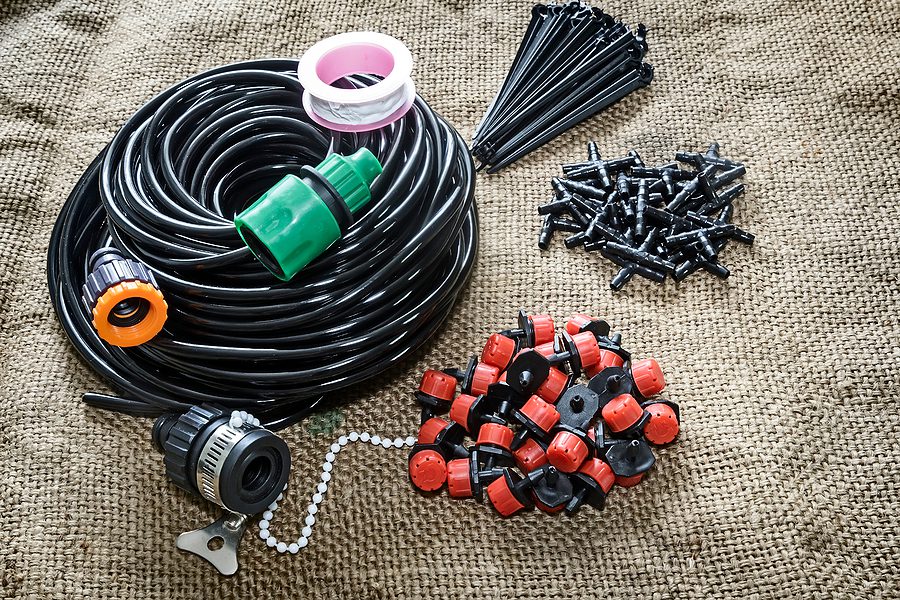
Homeowners in Albuquerque and surrounding communities often run into the same irrigation question once they begin upgrading or installing drip systems: what drip emitter flow rate actually works best for my soil?
At first glance, it seems like a simple choice between a few small plastic emitters. But in practice, emitter selection directly affects how water moves through soil, how deep plant roots develop, and how efficiently the entire landscape uses water—especially in a high-desert climate like central New Mexico.
One of the most common issues seen in local landscapes is mismatched irrigation: emitters that apply water too quickly for clay soil or too slowly for sandy soil. Both situations lead to poor plant performance, wasted water, and uneven growth patterns.
Understanding how emitter flow rates interact with soil type is one of the most important steps in building a healthy, water-efficient landscape.
What Is a Drip Irrigation Emitter Flow Rate?
A drip irrigation emitter flow rate refers to how much water the emitter releases over a set period of time, measured in gallons per hour (GPH).
Common residential emitter rates include:
- 0.5 GPH
- 1.0 GPH
- 2.0 GPH
Each emitter is designed to slowly release water directly into the soil near a plant’s root zone. Instead of spraying water across the surface like a traditional sprinkler, drip emitters deliver water precisely where it is needed.
The key advantage of this system is efficiency. Because water is applied slowly and directly to the soil, evaporation and runoff are significantly reduced—something that becomes especially important in Albuquerque’s hot, dry, and windy conditions.
However, the effectiveness of that slow application depends heavily on soil type.
How Soil Type Changes Water Movement
Soil is not just a medium that holds plants in place—it determines how water behaves after it is applied. In Albuquerque and surrounding areas, most properties contain some combination of clay, loam, and sandy soils, often with layers of caliche that further affect drainage.
Clay Soil
Clay soil absorbs water slowly. When water is applied too quickly, it tends to pool on the surface or run off before it can penetrate.
In these conditions:
- Slower emitter rates work best
- Water spreads outward more than downward
- Overwatering is a common issue if flow rates are too high
Sandy Soil
Sandy soil behaves in the opposite way. It drains quickly and does not hold moisture for long periods.
In these conditions:
- Higher emitter flow rates are often necessary
- Water moves downward quickly with less lateral spread
- Frequent deeper watering is typically required
Loam Soil
Loam is the most balanced soil type. It allows moderate infiltration and retains moisture without excessive runoff or drainage.
In these conditions:
- Mid-range emitter flow rates generally perform best
- Water spreads evenly both vertically and horizontally
- Plant root systems tend to develop more uniformly
In practical terms, soil type determines how long water needs to stay at the surface to be absorbed effectively. That directly influences which emitter flow rate is appropriate.
Choosing Between 0.5, 1.0, and 2.0 GPH Emitters
Selecting the correct emitter is not about choosing the strongest output—it is about matching water delivery to soil absorption.
0.5 GPH Emitters
Best suited for heavy clay soils and sensitive plantings.
These emitters release water very slowly, giving dense soils time to absorb moisture without runoff. They are often used for:
- Native plants
- Small shrubs
- Perennials
- Water-efficient xeriscape beds
They are especially useful in areas where water tends to pool or run off quickly.
1.0 GPH Emitters
This is the most commonly used general-purpose flow rate.
It works well in loam soils and mixed planting areas such as:
- Shrub beds
- Flower gardens
- Vegetable gardens
- Mixed landscape zones
This flow rate provides a balance between infiltration speed and water distribution, making it a versatile choice for many Albuquerque landscapes.
2.0 GPH Emitters
Best suited for sandy soil and larger plant material.
Because sandy soil drains quickly, higher flow rates help ensure moisture reaches deeper root zones before it dissipates.
Common uses include:
- Trees
- Large shrubs
- Fast-draining soil conditions
- Deep watering applications
While effective, these emitters must be used carefully in heavier soils to avoid oversaturation.
Drip Emitter Flow Rate Comparison
| Emitter Flow Rate | Best Soil Type | Typical Uses | Watering Characteristics |
| 0.5 GPH | Heavy Clay | Small shrubs, perennials, native plants | Slow application minimizes runoff |
| 1.0 GPH | Loam | Flower beds, shrubs, vegetables | Balanced infiltration and coverage |
| 2.0 GPH | Sandy Soil | Trees, larger shrubs, fast-draining soils | Rapid delivery for deep watering |
This comparison highlights an important principle used in professional irrigation design: matching application rate to soil absorption rate is more important than increasing water volume.
Matching Emitters to Different Plants
Soil type is only one part of the equation. Plant size, root depth, and water demand also play major roles in emitter selection.
Trees
Trees typically require multiple emitters placed around the root zone. In sandy soils, 2.0 GPH emitters are often appropriate. In clay soils, lower flow rates prevent surface saturation.
Shrubs
Shrubs perform best with balanced watering patterns. Depending on soil conditions, either 0.5 or 1.0 GPH emitters are commonly used.
Flower Beds
Flower beds benefit from even moisture distribution. 1.0 GPH emitters are often preferred in loam soils, with adjustments made for drainage conditions.
Native Plants and Xeriscape Areas
These plants are typically adapted to low-water environments. Slower emitter rates often encourage deeper root growth and better drought tolerance over time.
Common Drip Irrigation Mistakes
One of the most common issues seen in residential irrigation systems is incorrect emitter selection based on output alone rather than soil behavior.
Frequent mistakes include:
- Choosing high-flow emitters for all plants regardless of soil
- Ignoring clay soil drainage limitations
- Underwatering sandy soils with low-flow emitters
- Placing emitters too close to plant trunks
- Mixing plants with very different water needs in the same irrigation zone
These issues often lead to uneven plant growth, water waste, and long-term landscape decline.
Albuquerque Irrigation Considerations
Albuquerque’s high-desert environment makes emitter selection even more important than in many other regions.
Key local factors include:
- High-desert climate with low annual rainfall
- Intense UV exposure that increases evaporation
- Strong winds that accelerate moisture loss
- Clay-heavy soils with caliche layers in many areas
- Large temperature swings between day and night
These conditions mean irrigation systems must be designed for efficiency rather than volume. In many cases, slower application rates combined with longer watering cycles produce healthier results than frequent short watering periods.
Smart Irrigation Controllers and Proper Scheduling
Emitter selection is only one part of an efficient irrigation system. Scheduling also plays a critical role.
Modern smart irrigation controllers help adjust watering cycles based on:
- Seasonal temperature changes
- Evaporation rates
- Soil moisture conditions
- Plant water requirements
When combined with properly selected emitters, these systems help prevent both overwatering and underwatering, especially during Albuquerque’s hot summer months.
Frequently Asked Questions
Can I mix different emitter flow rates in one zone?
It is possible but not always recommended. Mixing emitter rates can lead to uneven watering unless the soil and plant types are very similar.
How many emitters should a tree have?
Most trees require multiple emitters spaced around the drip line rather than a single point of watering.
Should I increase GPH during the summer?
Not necessarily. Extending watering duration is often more effective than increasing flow rate.
How often should emitters be checked?
Emitters should be inspected seasonally to ensure they are not clogged or blocked.
Do native plants still need drip irrigation?
Yes, especially during establishment. Once mature, watering frequency can often be reduced significantly.
Final Thoughts
Selecting the correct drip irrigation emitter flow rate is not about choosing the highest output—it is about matching water delivery to soil behavior and plant needs.
Clay soils require slower application to prevent runoff. Sandy soils require higher flow rates to ensure water reaches the root zone. Loam soil typically falls somewhere in between.
When emitter selection is properly aligned with soil type, plant health improves, water use becomes more efficient, and landscapes become significantly more resilient, especially in Albuquerque’s demanding high-desert climate.
Proper irrigation design considers far more than individual components. It integrates soil conditions, plant requirements, and water efficiency into a complete system that supports long-term landscape performance.
Contact R & S Landscaping
For homeowners planning new irrigation systems, upgrading inefficient sprinkler zones, or converting landscape areas to drip irrigation, professional system design can significantly improve long-term results.
R & S Landscaping provides irrigation installation, drip system design, and water-efficient landscape solutions throughout Albuquerque and surrounding Central New Mexico communities.
A properly designed system ensures emitters, soil conditions, and plants need to all work together—creating a healthier, more sustainable landscape built for local conditions.