
Can You Convert an Existing Sprinkler Zone to Drip Irrigation?
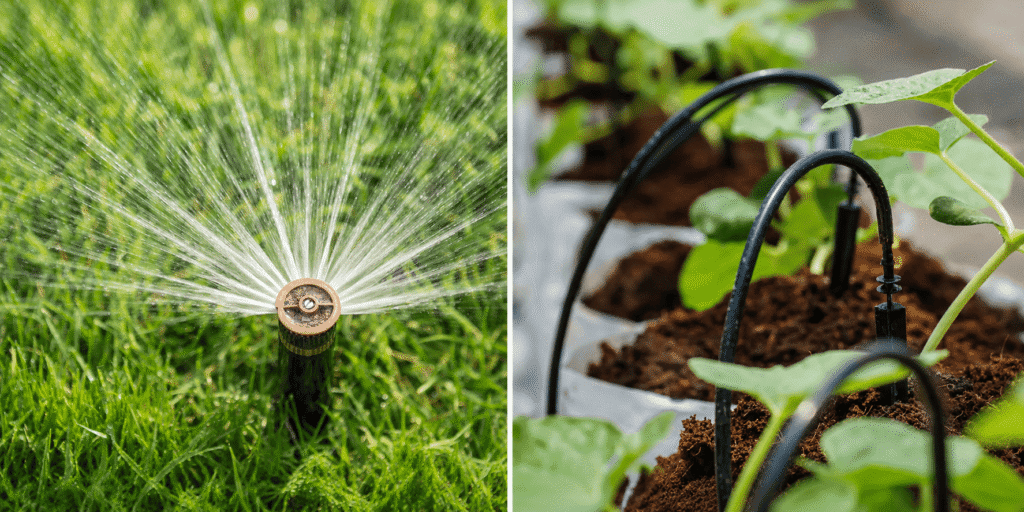
Many Albuquerque homeowners eventually decide that a section of lawn no longer makes sense. The grass may require too much water, struggle in the summer heat, or no longer fit the way the property is being used. That area might be replaced with a xeriscape, native plants, shrubs, a flower bed, decorative gravel, or a more practical outdoor space.
That change raises an important question: Do you need an entirely new irrigation system, or can the existing sprinkler zone be converted to drip irrigation?
Yes. Many existing underground sprinkler zones can be converted into drip irrigation systems. The conversion usually involves reusing the existing valve and underground supply lines while adding proper filtration, pressure regulation, drip tubing, and emitters for the new plants. In many cases, this is more practical and affordable than installing a completely separate irrigation zone.
However, the conversion must be designed correctly. Sprinkler systems and drip irrigation systems operate differently. Simply attaching a piece of drip tubing to an old sprinkler head may create excessive pressure, clogged emitters, uneven watering, or repeated leaks.
A successful conversion begins with evaluating the existing drip irrigation zone, understanding the new landscape plan, and matching the drip system to the water needs of the plants.
Can an Existing Underground Sprinkler Zone Be Converted?
Most underground sprinkler zones can be converted to drip irrigation if the existing valve, piping, and controller are still in usable condition.
In a typical conversion, several parts of the original system may remain:
- Irrigation controller
- Electrical wiring
- Zone valve
- Mainline connection
- Underground lateral piping
- Some sprinkler riser locations
Other parts are changed or added:
- Spray heads may be removed, capped, or replaced with conversion fittings.
- A pressure regulator may be installed.
- A filter may be added.
- Polyethylene drip tubing may replace surface spray coverage.
- Individual emitters or inline drip tubing may be installed near plants.
- Flush points and end caps may be added for maintenance.
Whether the original underground pipe is reused depends on its condition and layout. If it has repeated leaks, poor pressure, or an impractical route, repairing or partially rebuilding the zone may be more reliable.
The best approach is not simply to preserve every old component. It is to reuse the parts that still make sense while correcting the parts that do not.
Why Convert a Sprinkler Zone to Drip Irrigation?
Converting a sprinkler zone to drip irrigation can improve how water is delivered after a landscape renovation.
Sprinklers are designed to spray water across a broad area. That works well for turf because grass has roots spread throughout the lawn. Shrubs, trees, ornamental grasses, and desert plants have more defined root zones and usually do not need water applied evenly across every square foot.
Drip irrigation delivers water closer to the plants that need it.
Potential benefits include:
- Reduced overspray
- Less water lost to wind
- Less evaporation
- Reduced runoff
- Fewer wet sidewalks and walls
- More targeted root-zone watering
- Better control over individual plants
- Less water applied to bare rock or unused soil
- Fewer weeds between plants
- Easier irrigation of irregularly shaped beds
These advantages are especially useful in Albuquerque’s high-desert climate, where low humidity, intense sunlight, summer heat, wind, alkaline soils, and seasonal drought can make water management challenging.
R & S Landscaping designs and installs landscapes specifically for New Mexico conditions, including xeriscapes, drip irrigation systems, water conservation improvements, decorative rock areas, shrubs, trees, and complete landscape renovations.
How Does an Underground Sprinkler Zone Work?
Before converting a zone, it helps to understand how the original sprinkler system operates.
A standard residential drip irrigation system usually includes five main parts.
Irrigation Controller
The controller is the timer that determines when each zone turns on and how long it runs.
Each zone is programmed separately. A front lawn may run on one zone, while the backyard, side yard, and shrub beds may use other zones.
Zone Valve
The valve opens when it receives an electrical signal from the controller. Water then flows into the underground pipes connected to that zone.
In many conversions, the original valve can remain in place.
Underground Lateral Lines
These pipes carry water from the valve to the sprinkler heads.
They may be made from PVC or polyethylene pipe, depending on the age and design of the system.
Sprinkler Heads
Sprinkler heads distribute water across the lawn. Common types include fixed spray heads and rotating heads.
They are usually designed to operate at more pressure and discharge more water than drip emitters.
Water Pressure and Flow
Sprinkler systems depend on adequate pressure and flow to operate correctly. If pressure is too low, the heads may not rise or spray evenly. If pressure is too high, misting and overspray may occur.
Drip irrigation uses much less flow and generally needs lower, more controlled pressure.
That difference is why pressure regulation is one of the most important parts of a conversion.
How Does Drip Irrigation Work?
Drip irrigation applies water slowly and directly around the root zones of plants.
A typical system may include:
- Filter
- Pressure regulator
- Main drip tubing
- Small distribution tubing
- Individual emitters
- Inline emitter tubing
- Stakes
- Connectors
- End caps
- Flush valves
Water enters the zone through the existing valve. Before reaching the tubing, it usually passes through a filter and pressure regulator.
The water then travels through larger drip tubing and is released through emitters near the plants.
Emitters may release different amounts of water. A small perennial may need a different emitter arrangement than a mature shrub or young tree.
The goal is not to place one emitter at the trunk and assume the job is finished. The drip irrigation layout should encourage healthy root development over a suitable area.
What Components Are Needed for a Sprinkler-to-Drip Conversion?
The exact materials depend on the property, but a typical conversion may require the following components.
Pressure Regulator
A pressure regulator lowers the incoming pressure to a level suitable for drip irrigation.
Without regulation, high pressure can cause fittings to separate, emitters to discharge unevenly, or tubing to fail.
Filter
A filter removes particles that could clog the small openings in drip emitters.
This is especially important where the water contains sediment or mineral buildup.
Drip Conversion Adapter
A conversion adapter may replace an existing sprinkler head or connect the underground pipe to drip tubing.
Some adapters combine filtering and pressure regulation in one unit.
Main Drip Tubing
Main tubing carries water through the planting area. It is often installed on the surface beneath mulch or decorative gravel.
It should be routed where it can be inspected and repaired.
Distribution Tubing
Smaller tubing may be used to carry water from the main line to individual plants.
Emitters
Emitters control how quickly water is released.
The correct flow rate depends on:
- Plant size
- Soil conditions
- Sun exposure
- Slope
- Root-zone size
- Irrigation schedule
Inline Drip Tubing
Inline drip tubing has emitters built into the tubing at regular intervals. It may be useful for flower beds, groundcovers, closely spaced shrubs, or garden rows.
Stakes and Fasteners
Stakes keep tubing in the correct position.
Couplings, Tees, and Elbows
These fittings connect tubing and allow the layout to follow the shape of the planting area.
End Caps and Flush Valves
The ends of the tubing must be closed but should also allow periodic flushing. Flushing removes sediment that accumulates inside the line.
How Is a Sprinkler Zone Converted to Drip Irrigation?
A professional conversion generally follows a planned sequence rather than simply replacing one sprinkler head.
1. Evaluate the Existing Zone
The first step is to determine:
- Which valve controls the area
- How many sprinkler heads are connected
- Where the underground pipes run
- Whether the system leaks
- Whether pressure is adequate
- Whether the valve closes properly
- Whether the controller works
- Whether the zone serves any areas that must remain sprinklers
This inspection helps determine which components can be reused.
2. Plan the New Landscape
The drip irrigation design should follow the new landscape plan.
Important questions include:
- What plants will be installed?
- How large will they become?
- Which plants have similar watering needs?
- Will the area include native plants, shrubs, trees, flowers, or vegetables?
- Will the soil be covered with mulch or decorative rock?
- Are there slopes or drainage concerns?
- Will part of the original lawn remain?
The drip irrigation system should be designed around the plants, not the other way around.
3. Measure Pressure and Available Flow
The installer should confirm that the zone has adequate water supply and determine how pressure should be regulated.
Too much pressure can damage the drip system. Too little pressure can cause the farthest emitters to receive less water than those near the supply point.
4. Remove, Cap, or Adapt the Sprinkler Heads
Existing sprinkler locations may be handled in several ways.
Some heads may be removed and capped below grade. One or more locations may be converted into connection points for the drip tubing.
Unused openings must be sealed correctly. A poorly installed cap can leak underground and waste water without being immediately visible.
5. Install Filtration and Pressure Regulation
A filter and pressure regulator may be installed at the valve, at a sprinkler conversion point, or as part of another appropriate assembly.
The location depends on the design of the system.
6. Install the Drip Tubing
The main tubing is routed through the planting area.
It should be positioned to reach the plants without creating excessive lengths, sharp bends, or inaccessible connections.
Tubing is often installed beneath mulch or decorative rock, but it should not be buried so deeply that future maintenance becomes difficult.
7. Install Emitters for Each Plant
Emitters are placed according to plant size and water requirements.
A newly planted shrub may begin with one or two emitters. As the shrub grows, additional emitters may be added farther from the trunk to support the expanding root zone.
Trees often require multiple watering points distributed around the root area rather than a single emitter next to the trunk.
8. Flush the System
Before the ends are closed, water should be allowed to run through the tubing to remove dirt and debris.
The filter and flush points should remain accessible for future maintenance.
9. Test the Entire Zone
The system should be inspected for:
- Leaks
- Loose fittings
- Clogged emitters
- Uneven pressure
- Dry plants
- Excessively wet areas
- Kinked tubing
- Incorrect emitter placement
10. Reprogram the Controller
Drip irrigation usually runs differently from lawn sprinklers.
Because emitters apply water slowly, drip zones may need longer run times but fewer watering days, depending on the plants, soil, weather, and emitter flow rates.
The schedule should be adjusted seasonally.
Which Landscapes Benefit Most From a Drip Conversion?
Drip irrigation is especially useful for landscapes with individual plants or defined planting areas.
Xeriscapes
A xeriscape conversion is one of the most common reasons to replace sprinklers with drip irrigation.
Once grass is removed, spraying water across decorative rock or open soil is usually unnecessary. Drip lines can deliver water directly to drought-tolerant shrubs, ornamental grasses, native plants, and trees.
Flower Beds
Flower beds benefit from targeted irrigation because water can be applied close to the plant roots instead of spraying foliage, walls, or sidewalks.
Inline drip tubing may work well where flowers are planted closely together.
Shrub Beds
Shrubs often have different water needs than lawns. Individual emitters make it easier to control how much water each plant receives.
Trees
Trees can be irrigated with multiple emitters or a loop of drip tubing around the root zone.
As the tree grows, the watering area should expand outward.
Vegetable Gardens
Raised beds and garden rows can be watered efficiently with drip tubing or closely spaced emitters.
Native and Drought-Tolerant Plants
Native and adapted plants usually perform better when they receive deep, appropriately spaced watering rather than frequent shallow spray irrigation.
Decorative Landscape Islands
Small planting islands surrounded by gravel, patios, or walkways are often difficult to irrigate with sprinklers without creating overspray. Drip irrigation provides better control.
Sprinkler Irrigation vs. Drip Irrigation
| Feature | Sprinkler Irrigation | Drip Irrigation |
| Best suited for | Lawns and broad turf areas | Shrubs, trees, beds, gardens, xeriscapes |
| Water delivery | Sprays across the surface | Applies water near roots |
| Wind sensitivity | Higher | Lower |
| Evaporation potential | Higher | Lower |
| Overspray risk | Common near walls and walks | Usually limited |
| Operating pressure | Generally higher | Lower and regulated |
| Filtration need | Depends on equipment | Usually essential |
| Weed growth between plants | May be greater | Often reduced |
| Visibility | Heads are mostly underground | Tubing may be visible beneath mulch or rock |
| Maintenance | Head adjustments and nozzle cleaning | Filter, emitter, and tubing inspection |
Neither system is automatically better for every landscape.
Sprinklers remain practical for turf. Drip irrigation is generally more appropriate for individual plants and water-efficient landscape beds.
Can a Drip Conversion Save Water?
A properly designed drip system can reduce water waste because it applies water close to the intended plants.
The greatest savings often come from eliminating:
- Overspray onto sidewalks
- Water hitting walls and fences
- Wind drift
- Watering empty spaces
- Runoff from compacted soil
- Excess watering between shrubs
- Misting caused by high sprinkler pressure
Actual water savings vary. A poorly designed drip system can still waste water through leaks, incorrect schedules, excessive emitter flow, or unnoticed tubing damage.
Converting to drip irrigation does not eliminate the need for good irrigation management. The controller must still be programmed for the season, and the system should be inspected regularly.
Why Albuquerque Landscapes Need Careful Irrigation Design
Drip irrigation systems in Central New Mexico operate under demanding conditions.
Summer Heat
High temperatures can dry exposed soil quickly. Newly installed plants may need more frequent monitoring until their roots become established.
Low Humidity
Low humidity increases moisture loss from soil and plants.
Wind
Wind can reduce sprinkler efficiency by carrying spray away from the intended area. Drip irrigation is less affected because water is applied at ground level.
Alkaline and Clay Soils
Some Albuquerque properties have clay-heavy, compacted, or alkaline soils.
Clay soil absorbs water slowly. Applying too much water at once can cause pooling or runoff. Drip irrigation may need to run in shorter cycles with soaking time between them.
Caliche
Caliche layers can restrict drainage and root growth. Drip irrigation alone cannot correct poor soil structure, so soil preparation and plant selection remain important.
Winter Freezes
Above-ground tubing and exposed components can be damaged by freezing conditions.
Seasonal inspection and winter preparation help reduce problems.
Mineral Buildup
Minerals can accumulate in filters and emitters. Regular flushing and filter maintenance are important for reliable operation.
R & S Landscaping’s editorial and company standards emphasize local knowledge of Albuquerque’s elevation, summer heat, winter freezes, wind, alkaline and clay soils, drought conditions, monsoon weather, and water-conservation needs.
Can Sprinklers and Drip Irrigation Be Used on the Same Zone?
They can sometimes be physically connected, but mixing standard spray heads and drip irrigation on the same zone is usually not ideal.
The two systems have different:
- Pressure requirements
- Flow rates
- Run times
- Watering patterns
- Maintenance needs
A lawn sprinkler may apply a relatively large amount of water quickly. Drip emitters apply water slowly over a longer period.
If both operate on the same schedule, one part of the landscape may receive too much water while the other receives too little.
A better solution is often to place sprinklers and drip irrigation on separate zones. If the existing zone serves both an area that will remain grass and an area being converted, the system may need to be divided.
Whether that is practical depends on valve access, pipe layout, controller capacity, and project budget.
Can You Convert Individual Sprinkler Heads to Drip Emitters?
Yes, conversion fittings are available that replace individual spray heads and provide a connection for drip tubing.
This method can work for a small, straightforward planting bed. However, converting every head independently is not always the best design.
Potential problems include:
- Too many connection points
- Uneven pressure
- Hidden underground leaks
- Excess tubing
- Difficult maintenance
- Unnecessary fittings
- Poor alignment with the new plant layout
In many cases, it is better to select one appropriate supply point for the drip system and cap the remaining sprinkler locations.
Can You Do the Conversion Yourself?
A homeowner may be able to convert a small, simple zone if the existing system is in good condition and the new planting area is straightforward.
A DIY conversion may be practical when:
- Only one small bed is involved.
- The correct valve is easy to identify.
- The existing pipes do not leak.
- Water pressure is known.
- The homeowner understands filtration and pressure regulation.
- The planting plan is simple.
- The tubing will remain accessible.
- The homeowner is comfortable programming the controller.
Professional help is more appropriate when:
- Multiple zones are involved.
- Part of the zone must remain sprinklers.
- The system has pressure problems.
- Valves leak or fail to close.
- Underground pipe routes are unknown.
- The landscape is being completely redesigned.
- Trees and shrubs have different water needs.
- The property has slopes or drainage issues.
- The system is old or repeatedly leaks.
- The controller needs replacement.
- A new valve or additional zone may be required.
A conversion that looks simple above ground may reveal larger problems once the old heads and pipes are inspected.
DIY vs. Professional Sprinkler-to-Drip Conversion
| Consideration | DIY Conversion | Professional Conversion |
| Best project size | Small and simple | Small, large, or complex |
| Existing system evaluation | Limited to homeowner knowledge | Full pressure, valve, and piping review |
| Plant-zone design | May be basic | Matched to plants and mature size |
| Pressure regulation | Must be selected correctly | Properly sized and installed |
| Filtration | Easy to overlook | Included where needed |
| Leak detection | May be difficult | Professional troubleshooting available |
| Controller programming | Homeowner responsibility | Can be adjusted during project |
| Landscape integration | Limited | Can coordinate with full renovation |
| Long-term reliability | Depends on design and installation | Designed for maintainability |
What Are the Most Common Conversion Mistakes?
Many problems can be prevented during the design stage.
Skipping the Pressure Regulator
This is one of the most serious mistakes. Excessive pressure can damage fittings, cause emitters to flow unevenly, and shorten the life of the system.
Installing No Filter
Small particles can clog emitters. A filter protects the system and should remain accessible for cleaning.
Leaving Unused Sprinkler Heads Active
Unused spray heads may continue watering decorative rock, sidewalks, or empty spaces.
They should be removed, capped, or incorporated correctly into the new design.
Mixing Sprays and Drip on the Same Schedule
Sprinklers and drip emitters generally need different run times. Mixing them can result in overwatering one area and underwatering another.
Using the Same Emitter for Every Plant
A small flowering plant and a large shrub do not necessarily need the same amount of water.
Emitter quantity and placement should reflect plant size and root-zone needs.
Placing Emitters Against the Trunk
Water should generally be distributed through the root zone rather than concentrated continuously against a tree or shrub trunk.
Burying Tubing Too Deeply
Deeply buried tubing is difficult to inspect and repair. Drip tubing should remain accessible beneath mulch or decorative rock.
Failing to Add Flush Points
Sediment accumulates in tubing. Without accessible flush points, maintenance becomes more difficult.
Ignoring Mature Plant Size
Plants grow. An emitter arrangement that works on installation day may not adequately irrigate the plant several years later.
Overprogramming the Zone
More run time is not always better. Excess water can cause root problems, runoff, weed growth, and higher bills.
Does the Existing Valve Need to Be Replaced?
Not always.
The original valve may remain in service if it:
- Opens correctly
- Closes completely
- Does not leak
- Has adequate flow
- Is accessible
- Is compatible with the conversion design
A valve may need repair or replacement if it leaks, sticks, fails to shut off, has damaged wiring, or is too difficult to service.
Sometimes a pressure-regulating filter assembly can be installed downstream of the existing valve. In other cases, a different valve assembly may be preferable.
Is Conversion Always Less Expensive Than a New Irrigation Installation?
A conversion is often less expensive because it may reuse the controller, wiring, valve, and underground pipes.
However, it is not always the least expensive long-term choice.
Costs may increase when:
- Existing pipes leak.
- Valves need replacement.
- The zone must be divided.
- New trenches are required.
- The old layout does not match the new planting design.
- The controller has no available capacity.
- Backflow or pressure problems must be corrected.
- The landscape renovation is extensive.
- Large trees require a different drip irrigation layout.
- Drainage or grading work is also needed.
The most useful comparison is between the cost of a reliable conversion and the cost of a properly designed new system—not between a professional project and the cheapest possible repair.
R & S Landscaping’s company standards for drip irrigation systems emphasize lasting value rather than temporary fixes, with pricing based on professional workmanship, quality materials, and site-specific recommendations.
How Should the Controller Be Programmed After Conversion?
A drip zone usually should not use the same schedule as the former lawn sprinklers.
Programming depends on:
- Emitter flow rate
- Number of emitters
- Plant type
- Plant maturity
- Soil
- Shade
- Season
- Slope
- Weather
- Establishment period
New plants may require more frequent monitoring during establishment. Once established, many drought-tolerant plants perform better with deeper and less frequent watering.
During hot weather, the system may need longer or more frequent operation. During cooler weather, run times should usually be reduced.
After monsoon rainfall, drip irrigation may be delayed if the soil already contains enough moisture.
A smart drip irrigation controller can make seasonal adjustments easier, but it must still be programmed correctly for the drip zone.
How Often Should a Converted Drip System Be Inspected?
A drip system should be checked regularly because many leaks and clogs are less visible than a broken sprinkler head.
Inspect the system for:
- Clogged emitters
- Missing emitters
- Chewed tubing
- Loose connections
- Split tubing
- Wet spots
- Dry plants
- Dirty filters
- Mineral buildup
- Kinked lines
- Emitters buried under soil
- Plants that have outgrown the original layout
A practical schedule includes:
- Inspection at spring startup
- Periodic checks during hot weather
- Adjustment after new plants become established
- Filter cleaning as needed
- Flushing during the irrigation season
- Winter preparation before freezing weather
Frequently Asked Questions
Can you convert sprinkler heads into drip irrigation?
Yes. Some sprinkler heads can be removed and replaced with drip conversion adapters. Other heads may be capped while one selected location supplies the drip tubing.
Do you need a pressure regulator for drip irrigation?
Usually, yes. Drip tubing and emitters generally operate at lower pressure than standard sprinkler heads. A regulator helps protect the system and maintain more consistent flow.
Does a converted drip system need a filter?
Yes, filtration is strongly recommended. Small particles, sediment, and mineral deposits can clog emitters.
Can drip irrigation use existing underground sprinkler pipes?
Often, yes. Existing lateral pipes may be reused if they are in good condition and follow a practical route for the new landscape.
Can sprinklers and drip irrigation run on the same zone?
They can be connected, but it is usually not recommended because they require different pressures, flow rates, and run times.
How much water can a drip conversion save?
Savings vary by landscape, system condition, and programming. The greatest reductions usually come from eliminating overspray, wind drift, runoff, and watering between plants.
Is drip irrigation better than sprinklers?
Drip irrigation is generally better for shrubs, trees, gardens, flower beds, and xeriscapes. Sprinklers are usually better for broad lawn areas.
Can a lawn zone be converted after the grass is removed?
Yes. This is a common part of converting a lawn to xeriscaping, decorative rock, shrubs, native plants, or a flower bed.
How long does a sprinkler-to-drip conversion take?
The timeline depends on the size of the zone, condition of the old system, new planting plan, and whether repairs or trenching are needed. A small, simple bed may be completed quickly, while a full landscape renovation requires more planning and installation.
Can drip tubing be placed under gravel?
Yes. Drip tubing can be installed beneath decorative gravel or mulch, but it should remain accessible enough to inspect, flush, and repair.
Will drip irrigation work for trees?
Yes. Trees can be watered with multiple emitters or a loop of drip tubing placed around the root zone. The watering area should be expanded as the tree grows.
Should drip emitters be placed next to the trunk?
Not as the only watering point. Emitters should be distributed through the active root area rather than concentrating all water against the trunk.
Convert Your Landscape Without Starting the Irrigation System From Scratch
An existing underground sprinkler zone can often be converted to drip irrigation without replacing the entire system.
The controller, electrical wiring, valve, and some underground pipes may remain usable. The spray heads can then be removed, capped, or adapted to supply properly filtered and pressure-regulated drip tubing.
This can be an excellent solution when converting grass into:
- Xeriscaping
- Flower beds
- Native plant areas
- Shrub beds
- Tree plantings
- Raised gardens
- Decorative rock landscapes
The success of the project depends on more than installing tubing. Pressure, filtration, plant water needs, soil, system condition, emitter placement, future growth, and controller programming all matter.
A well-designed conversion can reduce overspray, improve water control, support healthier plants, and make better use of an existing Drip Irrigation System.
Schedule an Irrigation Evaluation With R & S Landscaping
If you are replacing part of your lawn with a xeriscape, shrubs, trees, native plants, or a flower bed, you may not need to install a completely new drip irrigation system.
R & S Landscaping can evaluate your existing sprinkler zone, identify which components can be reused, correct leaks or pressure problems, and design a New Drip Irrigation system that matches your new landscape.
The company provides Landscape Design, Landscape Installation, Xeriscaping, drip irrigation installation, irrigation repair, sprinkler repair, Drip Irrigation, tree and shrub planting, decorative rock installation, smart controller upgrades, and complete landscape renovations throughout Albuquerque, Rio Rancho, Corrales, Los Ranchos, and surrounding Central New Mexico communities.
Call R & S Landscaping at (505) 271-8419 to schedule a landscape and drip irrigation evaluation.
Let an experienced Albuquerque landscaping team help you create a beautiful, practical, and Water-Efficient Landscape designed for New Mexico’s high-desert climate.