
Drip Irrigation vs. Lawn Sprinklers: Which Is Best?
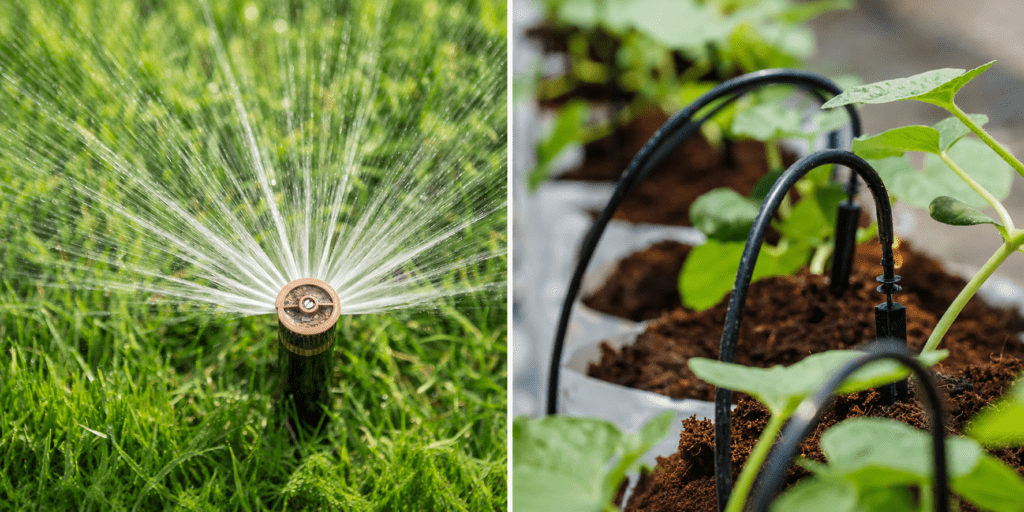
If you’ve been researching irrigation systems for your home, you’ve probably noticed that most recommendations eventually come down to two choices: drip irrigation or traditional lawn sprinklers.
At first glance, the decision might seem straightforward. One system waters lawn, while the other waters plants. There’s much more to it than that.
Homeowners throughout Albuquerque and central New Mexico often begin exploring new irrigation systems for practical reasons. Some are tired of sky-high water bills. Others are replacing an aging sprinkler system that no longer waters evenly. Many are installing new trees, shrubs, or flower beds and want a more efficient way to keep them healthy. Still others are converting portions of their yard to xeriscaping and want an irrigation system that uses water responsibly without sacrificing the beauty of their landscape.
The good news is that both drip irrigation systems and traditional lawn sprinklers have important roles in a professionally designed landscape. The key is understanding what each system is designed to do and why experienced landscapers often recommend using both together rather than viewing them as competing options.
In Albuquerque’s high-desert climate, where low annual rainfall, intense sunshine, low humidity, and frequent summer heat all increase evaporation, choosing the right irrigation system can have a significant impact on water conservation, plant health, and long-term landscape performance.
This guide explains how each irrigation method works, where each performs best, and why combining both systems often creates the healthiest, most water-efficient landscape.
Why Choosing the Right Irrigation System Matters
Many homeowners assume irrigation is simply about getting water onto the landscape.
Professional landscapers look at it differently.
An irrigation system is responsible for delivering the right amount of water to the right plants at the right time. When those three factors work together, landscapes develop healthier root systems, require less maintenance, and generally waste far less water.
When one of those factors is out of balance, problems begin to appear.
Grass may develop dry spots even though the sprinkler system runs every day. Shrubs can struggle because they receive too much water or not enough. Flower beds may become oversaturated while nearby trees remain thirsty. In many cases, homeowners respond by increasing watering time, which often treats the symptom instead of solving the underlying problem.
One reason irrigation design is so important in Albuquerque is that landscapes rarely consist of a single type of plant. A typical yard may include turfgrass, shade trees, ornamental shrubs, perennial flowers, decorative landscape beds, gravel areas, and native plants—all with different watering requirements.
Trying to irrigate every part of the landscape the same way usually leads to unnecessary water use and uneven plant health.
Matching the irrigation method to the plants being watered creates a far more efficient system.
Understanding the Two Main Types of Landscape Irrigation
Professional landscape irrigation generally relies on two primary methods.
Traditional sprinkler systems distribute water over a wide area by spraying it through pop-up spray heads or rotating sprinkler heads. They are designed to provide uniform coverage across large sections of lawn.
Drip irrigation systems work differently.
Instead of spraying water into the air, drip irrigation slowly delivers water directly to the soil near the base of each plant. Water moves gradually into the root zone where it can be absorbed efficiently with very little evaporation or runoff.
Neither system is universally better.
Each was designed for a different purpose.
Understanding those differences is one of the most important steps toward creating a landscape that stays healthy while using water responsibly.
What Is Drip Irrigation?
Drip irrigation is a low-pressure irrigation system designed to apply water slowly and precisely where plants need it most—at their roots.
Rather than soaking an entire area, a network of flexible tubing carries water through the landscape to individual emitters positioned near trees, shrubs, flowers, vegetable gardens, or other planted areas.
Each emitter releases water gradually over an extended period.
This slower application allows moisture to soak into the soil instead of running across the surface. Because the surrounding soil has time to absorb the water, deeper root development is encouraged while unnecessary water loss is minimized.
For homeowners in Albuquerque, this approach offers an important advantage.
Summer temperatures frequently climb into the 90s, humidity remains low, and sunshine is intense for much of the year. Water sprayed high into the air can evaporate quickly before it ever reaches the soil. Drip irrigation largely avoids that problem by placing water exactly where plants can use it.
The result is often healthier plants using significantly less water than many traditional watering methods.
How Drip Irrigation Works
Although drip irrigation systems may appear simple from the surface, they are carefully designed to deliver water efficiently throughout the landscape.
Water first passes through a filtration system that helps prevent debris from clogging the small emitters. From there, pressure regulators reduce water pressure to levels appropriate for drip tubing, allowing the system to operate consistently without damaging the components.
Flexible polyethylene tubing is then routed through planting beds and around trees and shrubs. Small emitters, dripline tubing, or micro-sprayers release controlled amounts of water directly into the soil surrounding each plant.
Because every landscape is different, irrigation zones are typically organized according to plant water requirements rather than simply following property boundaries.
For example, drought-tolerant native plants often require much less irrigation than flowering shrubs or newly planted trees. Separating these plants into different irrigation zones allows each section of the landscape to receive only the water it actually needs.
This concept, often called hydrozoning, is one of the reasons professionally designed irrigation systems are generally more efficient than systems that treat the entire landscape the same.
Another important benefit is that drip irrigation encourages roots to grow deeper into the soil.
Frequent shallow watering tends to keep roots close to the surface, where they dry out quickly during hot weather. Slow, deep watering allows moisture to penetrate farther into the soil profile, encouraging stronger root systems that help plants tolerate Albuquerque’s long dry periods.
Over time, deeper roots often translate into healthier trees, stronger shrubs, improved drought resistance, and landscapes that require less supplemental watering to remain attractive.
For many homeowners, that’s one of the greatest advantages of drip irrigation. Instead of simply watering plants, the system helps create conditions that support healthier long-term growth while using water more responsibly.
How Traditional Lawn Sprinkler Systems Work
While drip irrigation is an excellent solution for watering individual plants, traditional lawn sprinkler systems remain the best choice for one important part of most residential landscapes—healthy turfgrass.
Grass grows as a continuous surface rather than as individual plants. To stay healthy, it needs relatively uniform moisture across the entire lawn. Trying to water large grass areas with drip irrigation would require an extensive network of tubing and emitters that would be impractical for most properties.
Traditional sprinkler systems solve this challenge by distributing water evenly over broad areas.
Most residential systems use a combination of spray heads and rotor heads. Spray heads apply water in a fixed pattern and are commonly used for smaller lawn sections. Rotor heads rotate slowly, throwing streams of water farther across larger turf areas while applying water at a slower rate.
Modern sprinkler systems are divided into irrigation zones. Each zone operates independently, allowing different areas of the landscape to be watered according to their specific needs. Separating sunny lawn areas from shaded sections, for example, helps prevent overwatering while maintaining healthy grass throughout the property.
Like any irrigation system, sprinkler performance depends heavily on proper design.
Head spacing, water pressure, nozzle selection, slope, soil type, and scheduling all influence how effectively water reaches the root zone. Even a high-quality sprinkler system can waste water if it is poorly designed or improperly adjusted.
Comparing Drip Irrigation and Traditional Sprinklers
One of the most common questions homeowners ask is whether drip irrigation is “better” than lawn sprinklers.
The answer depends entirely on what you’re trying to water.
Each system excels in situations for which it was specifically designed.
| Feature | Drip Irrigation | Traditional Lawn Sprinklers |
| Best For | Trees, shrubs, flower beds, vegetable gardens, xeriscapes | Turfgrass and large lawn areas |
| Water Delivery | Directly to the root zone | Sprays water across a broad surface |
| Water Efficiency | Very high | Moderate to high when properly designed |
| Evaporation | Minimal | Higher, especially during hot afternoons |
| Runoff Potential | Low | Can increase if watering too quickly |
| Weed Growth | Reduced because surrounding soil stays drier | More widespread moisture can encourage weeds |
| Maintenance | Periodic filter cleaning and emitter inspection | Head adjustments, nozzle replacement, leak repairs, seasonal inspections |
Rather than choosing one system over the other, experienced landscapers typically select the irrigation method that best matches each landscape area’s watering requirements.
A professionally designed landscape often uses both systems together.
Why Water Savings Matter in Albuquerque
Water conservation has become one of the most important considerations in modern landscape design.
That is especially true throughout Albuquerque and central New Mexico, where annual rainfall is relatively low and extended dry periods are common.
Every gallon of water that reaches a plant’s roots provides value.
Every gallon that evaporates, blows away in the wind, or runs into the street does not.
This is one reason drip irrigation has become increasingly popular for planting beds, shrubs, trees, and xeriscape landscapes.
Because water is delivered directly into the soil surrounding each plant, very little is lost to evaporation. Wind also has far less opportunity to carry water away before it reaches the ground—a common challenge during Albuquerque’s breezy spring afternoons.
Traditional sprinklers, by comparison, must project water through the air before it reaches the landscape. On hot, windy days, some moisture naturally evaporates or drifts away from its intended target.
That does not make sprinkler systems inefficient.
It simply means they are performing a different job.
Proper scheduling, appropriate nozzle selection, pressure regulation, and routine maintenance can significantly improve sprinkler efficiency while reducing unnecessary water use.
When both irrigation methods are used where they perform best, homeowners often notice healthier plants and lower overall water consumption.
Irrigation Isn’t Just About Saving Water
Many homeowners begin researching irrigation systems because they want to reduce their monthly water bill.
While water conservation is certainly an important benefit, experienced landscapers usually evaluate irrigation systems from a broader perspective.
Proper irrigation also influences:
- Root development
- Plant health
- Disease prevention
- Weed growth
- Soil stability
- Fertilizer efficiency
- Long-term landscape maintenance
For example, repeatedly spraying shrub foliage late in the evening may increase moisture around leaves for extended periods. Delivering water directly to the soil with drip irrigation reduces that issue while allowing the plant’s root system to absorb moisture where it is needed most.
Likewise, overwatering lawns often encourage shallow root systems, making grass more dependent on frequent irrigation during summer heat.
Proper irrigation scheduling is just as important as selecting the right irrigation system.
Albuquerque’s Climate Makes Irrigation Design More Important
Landscaping recommendations that work well in cooler, wetter climates often need to be adjusted for Albuquerque.
Several local conditions influence irrigation performance.
High Evaporation Rates
Intense sunshine, low humidity, and warm temperatures increase evaporation throughout much of the year. Water applied slowly at the soil surface generally remains available to plants longer than water sprayed high into the air during the hottest part of the day.
Clay Soils and Caliche
Many Albuquerque properties contain heavy clay soil or layers of caliche beneath the surface.
Clay absorbs water more slowly than sandy soils. Applying water too quickly can cause runoff before moisture has time to soak into the root zone.
Drip irrigation naturally addresses this challenge by applying water gradually, allowing the soil to absorb moisture more effectively.
Changing Plant Water Requirements
Not every landscape plant requires the same amount of irrigation.
Established native plants often need significantly less supplemental watering than newly planted ornamentals or seasonal flowers.
Separating irrigation zones according to plant type allows each area to receive appropriate amounts of water rather than treating the entire landscape identically.
This approach improves efficiency while helping plants thrive.
Seasonal Adjustments
One mistake many homeowners make is leaving irrigation schedules unchanged throughout the year.
Landscapes require different amounts of water during spring, summer, fall, and winter.
Smart irrigation controllers make seasonal adjustments much easier by automatically modifying watering schedules based on weather conditions and seasonal changes.
Even manually adjusting irrigation timers several times each year can improve water efficiency and reduce unnecessary watering.
Why Professional Irrigation Design Often Combines Both Systems
After evaluating hundreds of residential landscapes, one conclusion becomes clear.
Very few properties benefit from relying exclusively on drip irrigation or exclusively on traditional lawn sprinklers.
Instead, the most efficient landscapes typically use each system where it performs best.
Large lawn areas receive uniform coverage from properly designed sprinkler zones.
Trees, shrubs, flower beds, vegetable gardens, and xeriscape areas receive slow, targeted watering through drip irrigation.
This balanced approach allows every part of the landscape to receive water according to its specific needs rather than forcing one irrigation method to perform every task.
For Albuquerque homeowners, that often translates into healthier plants, more attractive landscapes, lower water consumption, and irrigation systems that continue performing efficiently for many years.
Installation Considerations for Long-Term Irrigation Performance
Whether you’re installing a new irrigation system or replacing an older one, careful planning is just as important as the equipment itself.
One of the biggest differences between a professionally designed irrigation system and a basic installation is that professional landscapers evaluate the landscape as a whole before determining where water should be applied.
That evaluation often includes:
- Existing plant material
- Soil conditions
- Sun and shade exposure
- Property grading
- Drainage patterns
- Water pressure
- Plant water requirements
- Future landscape plans
Rather than installing irrigation first and hoping it meets the landscape’s needs, experienced designers develop an irrigation plan that supports the entire landscape over the long term.
For example, if a homeowner plans to replace portions of the lawn with drought-tolerant plants over the next several years, the irrigation system can often be designed with those future improvements in mind. This type of planning helps reduce unnecessary modifications later while improving overall irrigation efficiency.
Professional irrigation zoning is equally important.
Instead of placing every part of the landscape on the same watering schedule, zones should be organized according to plant type, sun exposure, soil conditions, and water requirements. Turfgrass, ornamental shrubs, flower beds, vegetable gardens, and native plants all have different irrigation needs. Treating them individually allows each area to receive the amount of water it requires.
Maintaining Your Irrigation System
Like any part of your landscape, irrigation systems benefit from periodic maintenance.
Even a well-designed system can gradually become less efficient if small problems are ignored.
For drip irrigation systems, maintenance often includes:
- Inspecting tubing for damage.
- Cleaning or replacing filters.
- Checking emitters for clogs.
- Confirming water is reaching every plant.
- Looking for leaks or damaged fittings.
- Adjusting emitters as plants mature.
Traditional sprinkler systems should also be inspected regularly.
Homeowners frequently discover sprinkler heads that have shifted after mowing, become clogged with debris, or spray sidewalks instead of grass. Even a slightly misaligned sprinkler head can waste a surprising amount of water over an entire irrigation season.
Seasonal inspections help identify these issues before they affect plant health or increase water bills.
Many professional landscapers recommend evaluating irrigation systems at least once each spring before peak watering season begins and again during the fall before winterization or seasonal shutdown.
Routine maintenance not only improves water efficiency but also extends the life of the irrigation system.
How Smart Irrigation Controllers Improve Efficiency
Today’s irrigation technology offers homeowners much more control than traditional timers.
Smart irrigation controllers automatically adjust watering schedules based on factors such as weather conditions, seasonal changes, and programmed landscape requirements.
Instead of watering the same amount every day regardless of conditions, these systems can reduce irrigation after rainfall, adjust schedules during cooler weather, or increase watering slightly during periods of extreme heat when appropriate.
This flexibility helps eliminate one of the most common causes of water waste—watering when additional irrigation simply isn’t needed.
For Albuquerque homeowners, where weather conditions can change quickly throughout the growing season, smart controllers often improve irrigation efficiency while making system management much easier.
When paired with professionally designed drip irrigation and sprinkler zones, smart controllers help deliver water only when and where it benefits the landscape.
Frequently Asked Questions
Is drip irrigation better than traditional lawn sprinklers?
Not necessarily.
Each system serves a different purpose.
Drip irrigation is generally the preferred choice for trees, shrubs, flower beds, vegetable gardens, and xeriscape landscapes because it delivers water directly to the root zone with very little evaporation or runoff.
Traditional sprinkler systems remain the most effective method for watering large turf areas evenly.
The best irrigation system often combines both.
Can drip irrigation reduce my water bill?
In many situations, yes.
Because drip irrigation applies water slowly and directly to plant roots, less water is typically lost to evaporation, overspray, and runoff. The amount of savings depends on the landscape, irrigation schedule, plant selection, and the condition of the existing irrigation system.
Can an existing sprinkler system be upgraded to include drip irrigation?
In many cases, yes.
Many homeowners add drip irrigation zones as they renovate landscape beds, install new shrubs, or convert portions of their yard to xeriscaping. An experienced irrigation professional can evaluate the existing system and determine the best way to integrate additional watering zones.
Which plants benefit most from drip irrigation?
Drip irrigation works especially well for:
- Trees
- Shrubs
- Flower beds
- Vegetable gardens
- Perennials
- Native plants
- Xeriscape landscapes
- Container gardens
These plants generally benefit from slow, consistent watering delivered directly to the soil surrounding their roots.
Choosing the Right Irrigation System for Your Landscape
Every landscape is different.
The size of your property, the types of plants you grow, your soil conditions, sun exposure, and long-term landscaping goals all influence which irrigation approach will perform best.
Rather than asking whether drip irrigation is better than traditional sprinklers, a more useful question is:
Which irrigation method is best for each area of my landscape?
That shift in perspective often leads to a more efficient, healthier, and easier-to-maintain landscape.
Professional landscapers rarely think in terms of choosing one irrigation method over another. Instead, they select the right watering solution for each part of the property, creating a system that works together as a whole.
The Bottom Line on Drip Irrigation Systems vs. Lawn Sprinklers
Drip irrigation systems and traditional lawn sprinklers each play an important role in a well-designed landscape.
Drip irrigation excels at watering trees, shrubs, flower beds, vegetable gardens, and xeriscape landscapes by delivering water slowly and directly to the root zone. Traditional sprinkler systems remain the best solution for irrigating larger lawn areas evenly.
When thoughtfully combined, these two irrigation methods help reduce water waste, improve plant health, encourage deeper root growth, and create landscapes that perform better over the long term—especially in Albuquerque’s challenging high-desert climate.
Choosing the right irrigation strategy isn’t simply about saving water today. It’s about creating a landscape that remains healthy, attractive, and sustainable for years to come.
Let R & S Landscaping Help You Build a Smarter Irrigation System
Whether you’re installing a new landscape, upgrading an older sprinkler system, adding drip irrigation to existing planting beds, or planning a water-wise xeriscape conversion, thoughtful irrigation design can make a lasting difference in the health and beauty of your property.
At R & S Landscaping, we help homeowners throughout Albuquerque and the surrounding central New Mexico communities design and install irrigation systems that match the unique needs of their landscapes. By combining practical experience with a thorough understanding of local climate, soils, drainage, and water conservation practices, we create irrigation solutions that support healthier plants while making efficient use of every gallon of water.
If you’re considering improvements to your irrigation system or planning a new landscape project, contact R & S Landscaping at 505-271-8419. We’d be happy to evaluate your property, answer your questions, and help you choose the irrigation approach that best supports your landscape today and well into the future.