
Can You Convert Sprinklers to Drip Irrigation?
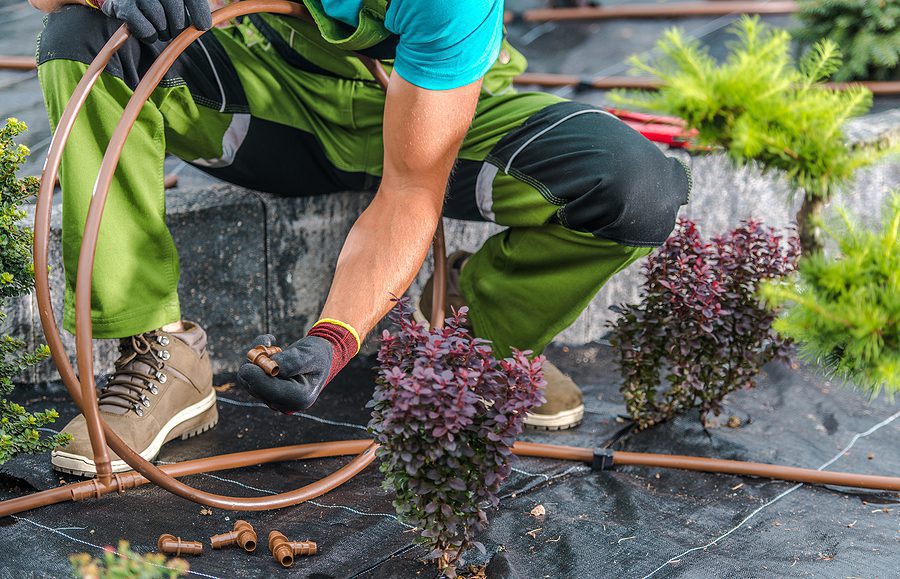
Part 1: Understanding Sprinkler-to-Drip Conversions
Introduction
In many Albuquerque landscapes, irrigation systems evolve over time rather than being replaced all at once. A homeowner may start with a traditional lawn and sprinkler system, then gradually transition portions of that yard into xeriscaping, native plantings, shrub beds, or decorative rock. As those changes happen, one of the most common questions arise:
Can you convert an existing underground sprinkler zone into a drip irrigation system?
In most cases, the answer is yes—but the real value is understanding how and when that conversion should be done.
R & S Landscaping frequently works with homeowners throughout Albuquerque, Rio Rancho, Corrales, and surrounding communities who are looking to improve water efficiency without tearing out an entire irrigation system. Instead of starting from scratch, many landscapes can be upgraded by reusing existing sprinkler lines and valves, then adapting them into properly designed drip irrigation zones.
This approach is especially useful in Central New Mexico’s high-desert climate, where water conservation is not only a preference but a practical necessity. With intense sun, low humidity, and long dry periods, efficient irrigation design plays a major role in long-term plant health and landscape sustainability.
However, converting a sprinkler zone into drip irrigation is not as simple as attaching drip tubing to a sprinkler head. It requires understanding pressure, filtration, zoning, and how water behaves differently at the soil level compared to overhead spray systems.
Can Existing Sprinkler Zones Be Converted?
In many residential properties, existing sprinkler zones can be successfully converted into drip irrigation systems—but not all zones are equally suitable.
One of the most important factors is how that zone is currently used or will be used in the future.
Sprinkler systems are typically designed to distribute water in a broad, uniform pattern across turf areas. Drip irrigation, on the other hand, is designed to deliver water slowly and directly to the root zone of individual plants or planting beds.
Because of that difference, conversion works best when a sprinkler zone is repurposed for:
- Landscape beds
- Shrub plantings
- Tree irrigation zones
- Xeriscape conversions
- Native plant gardens
- Decorative rock landscapes with targeted plantings
In these situations, the sprinkler system is no longer needed for full-coverage turf watering, which opens the door for a more efficient irrigation design.
However, there are cases where conversion is more complicated. For example, if a zone still includes mixed turf and plant material with very different water needs, a single conversion may not be ideal without reworking the zoning layout. In those situations, R & S Landscaping often evaluates whether the zone should be split or redesigned rather than simply converted.
The key idea is this: conversion is possible when the landscape purpose of the zone has changed.
Once the irrigation goal shifts from “watering grass evenly” to “watering plants efficiently,” drip irrigation becomes a strong long-term solution.
How a Sprinkler-to-Drip Conversion Works
A proper sprinkler-to-drip conversion is not just a surface modification—it is a system adjustment that changes how water is delivered, regulated, and distributed.
Even though the existing underground piping and valve may remain in place, several critical components must be added or modified to ensure the system functions correctly.
1. Starting at the Existing Sprinkler Zone
Most conversions begin at the sprinkler valve that controls the zone. Instead of abandoning the underground infrastructure, the system is typically reused up to the point of distribution.
This is one of the main advantages of conversion—it allows homeowners to retain the core irrigation system while upgrading efficiency at the surface level.
2. Adding Pressure Regulation
Drip irrigation operates at a much lower pressure than traditional sprinkler systems. Sprinklers are designed for higher pressure to project water through the air, while drip systems require controlled, reduced pressure to prevent damage and ensure consistent flow.
A pressure regulator is installed to reduce and stabilize water pressure before it enters the drip tubing. Without this step, emitters may blow out, clog unevenly, or deliver inconsistent water output.
3. Installing Filtration
One of the most important but often overlooked components in a conversion is filtration.
Because drip emitters have very small openings, even minor debris in the water line can cause clogging. A filter is installed at the start of the drip system to capture sediment and protect emitter performance over time.
In Albuquerque’s environment, where mineral content and fine sediment can be present in irrigation systems, filtration plays a critical role in long-term reliability.
4. Converting to Drip Distribution Tubing
Once pressure regulation and filtration are in place, the system transitions from rigid sprinkler piping to flexible drip tubing.
This tubing is laid across planting areas and designed to deliver water directly to the root zones of plants. It can be configured in multiple ways depending on the landscape design:
- Loop systems around shrubs
- Straight runs along planting beds
- Tree irrigation rings
- Multi-zone drip layouts for mixed plantings
This flexibility is what makes drip irrigation so effective in xeriscape and low-water-use landscapes.
5. Adding Emitters or Drip Lines
Emitters control how much water each plant receives. Depending on the landscape design, emitters may be placed individually at plants or integrated into dripline tubing with built-in spacing.
This is where proper design becomes especially important. Different plants require different watering volumes, and soil type plays a major role in how quickly water is absorbed and retained.
A well-designed conversion ensures that each plant receives the appropriate amount of water without waste or oversaturation.
6. Adjusting the Irrigation Controller
Finally, the irrigation controller must be reprogrammed to reflect the new watering method.
Drip irrigation typically requires longer but less frequent watering cycles compared to sprinklers. Instead of short bursts of overhead spray, drip systems rely on slow, deep watering that encourages root development.
Proper scheduling ensures that the converted zone operates efficiently within Albuquerque’s seasonal climate patterns.
Transitioning from Concept to Design
A sprinkler-to-drip conversion is not just a mechanical upgrade—it is a shift in irrigation philosophy. Instead of watering an entire surface area uniformly, the system is redesigned to support individual plant needs.
When done correctly, this approach significantly improves water efficiency while supporting healthier plant growth, especially in Albuquerque’s dry, high-desert environment where evaporation rates are high and water conservation is essential.
Part 2: Benefits of Converting to Drip Irrigation
Once homeowners understand how a sprinkler-to-drip conversion works, the next question is usually whether making the change is worthwhile.
For many Albuquerque properties, the answer is yes.
As landscapes mature, they often change significantly from their original design. Large grass areas may be replaced with decorative gravel, drought-tolerant native plants, flowering shrubs, or shade trees. Continuing to irrigate these areas with overhead sprinklers frequently results in unnecessary water use because the irrigation system no longer matches the landscape.
Converting an existing sprinkler zone to drip irrigation allows the irrigation system to evolve along with the landscape.
Instead of applying water uniformly across an entire area, drip irrigation delivers moisture precisely where plants need it—at the root zone. That simple change creates several long-term advantages.
Improved Water Efficiency
One of the biggest benefits of drip irrigation is its ability to reduce water waste.
Traditional sprinklers spray water through the air before it reaches the ground. During Albuquerque’s warm, dry summers, some of that water naturally evaporates or drifts away in the wind before it ever reaches the soil.
Drip irrigation works differently.
Water moves slowly through emitters positioned near each plant, soaking directly into the soil where roots can absorb it. Because the water is applied close to the ground, evaporation and wind drift are dramatically reduced.
For homeowners trying to create a more water-wise landscape, this is often one of the primary reasons to convert an existing sprinkler zone.
Healthier Trees, Shrubs, and Landscape Plants
Plants rarely benefit from having their leaves sprayed every time they are watered.
Trees, shrubs, flowering perennials, and native plants generally perform best when water reaches the soil surrounding their roots rather than the foliage.
Drip irrigation encourages this type of watering.
By applying water slowly and deeply, moisture penetrates farther into the soil profile, encouraging stronger root development. Plants with deeper root systems often become more resilient during Albuquerque’s hot summers because they can access moisture stored deeper in the soil.
Over time, healthier root systems typically translate into healthier plants.
Reduced Weed Growth
Another advantage homeowners often notice is fewer weeds.
Sprinkler systems wet the entire landscape surface, including areas where weeds are likely to germinate.
Drip irrigation limits watering to the immediate root zones of desired plants, leaving much of the surrounding soil relatively dry.
While no irrigation system eliminates weeds entirely, reducing unnecessary surface moisture often makes unwanted vegetation easier to manage.
Lower Long-Term Maintenance
Once properly installed, drip irrigation systems generally require less routine adjustment than traditional sprinklers.
Sprinkler heads can become misaligned after mowing, damaged by vehicles or foot traffic, or clogged with debris. These issues often go unnoticed until dry spots appear or water begins spraying sidewalks, fences, or driveways.
Drip tubing remains close to the ground and is less susceptible to accidental damage when installed correctly.
Routine inspections are still important, but ongoing maintenance is often simpler because water is delivered through a contained network rather than projected across the landscape.
Better Compatibility with Xeriscaping
Many Albuquerque homeowners are replacing portions of their lawn with xeriscaping.
Contrary to popular belief, xeriscaping does not mean eliminating plants.
It means selecting plants appropriate for the local climate and irrigating them efficiently.
Because drip irrigation delivers water directly to individual plants, it pairs naturally with xeriscape landscapes that include native grasses, ornamental shrubs, flowering perennials, succulents, and drought-tolerant trees.
For this reason, converting existing sprinkler zones is often one of the first improvements made during a xeriscape renovation.
When a Sprinkler-to-Drip Conversion Makes Sense
Not every landscape requires a conversion.
However, there are several situations where replacing sprinklers with drip irrigation can significantly improve irrigation efficiency.
You’re Removing Part of Your Lawn
One of the most common reasons homeowners convert sprinkler zones is lawn removal.
Perhaps the grass no longer receives enough sunlight to thrive, requires more maintenance than desired, or consumes more water than the homeowner wishes to use.
Once turf is removed, overhead sprinklers often become unnecessary.
Replacing them with drip irrigation creates a watering system better suited to shrubs, native plants, and decorative landscape beds.
You’re Installing a Xeriscape Landscape
Xeriscaping has become increasingly popular throughout Albuquerque because it reduces water use while creating attractive, low-maintenance outdoor spaces.
Instead of watering large expanses of turf, drip irrigation allows each plant to receive water according to its specific needs.
This targeted approach supports healthier growth while using significantly less water.
You’re Adding Trees and Shrubs
Young trees and newly installed shrubs benefit from deep, consistent watering during establishment.
Converting an existing sprinkler zone allows irrigation to be concentrated around root systems rather than distributed across surrounding areas that may not require additional moisture.
You’re Renovating an Older Landscape
Many older irrigation systems were designed decades ago when landscape layouts looked very different.
As planting beds expand and turf areas shrink, existing sprinkler coverage may no longer match the landscape.
Rather than replacing the entire irrigation system, converting individual zones often provides a practical way to modernize irrigation while preserving much of the existing infrastructure.
Common Sprinkler-to-Drip Conversion Mistakes
Although conversion is often straightforward, several common mistakes can reduce irrigation performance.
Understanding these issues helps homeowners appreciate why proper planning matters.
Skipping the Pressure Regulator
Drip systems require significantly lower operating pressure than sprinklers.
Without pressure regulation, emitters may fail prematurely or deliver uneven amounts of water.
Forgetting the Filter
Even small particles can clog drip emitters.
Installing filtration helps protect the system and reduces maintenance over time.
Mixing Sprinklers and Drip on the Same Zone
Sprinklers and drip irrigation generally operate at different pressures and watering schedules.
Attempting to run both on the same irrigation zone often creates uneven watering and reduced efficiency.
Separate zones almost always produce better results.
Using the Wrong Emitters
Selecting emitter flow rates without considering soil type or plant size is another common problem.
Heavy clay soils, sandy soils, mature trees, newly planted shrubs, and flower beds all have different watering requirements.
Proper emitter selection is essential for long-term success.
Ignoring Irrigation Zoning
Grouping plants with dramatically different water requirements on the same irrigation zone frequently leads to overwatering some plants while underwatering others.
Professional irrigation design organizes zones according to plant water needs rather than simply following property boundaries.
Traditional Sprinkler Zone vs. Converted Drip Irrigation Zone
| Feature | Traditional Sprinklers | Converted Drip Irrigation |
| Water Delivery | Overhead spray | Direct root zone watering |
| Best For | Turfgrass | Trees, shrubs, flower beds, xeriscapes |
| Water Efficiency | Moderate | Excellent |
| Evaporation | Higher | Minimal |
| Wind Drift | Possible | Very little |
| Runoff Potential | Moderate | Low |
| Weed Growth | Greater | Reduced |
| Plant Health | Good for lawns | Excellent for landscape plants |
| Water Conservation | Moderate | High |
| Long-Term Flexibility | Limited | Easily adapted to landscape changes |
This comparison illustrates why many landscape professionals recommend matching the irrigation method to the plants being watered rather than relying on one system for every part of the landscape.
Albuquerque Water Conservation Tip
Local Irrigation Insight
Albuquerque’s combination of high elevation, low humidity, intense sunlight, and frequent spring winds creates conditions where water evaporates quickly from exposed surfaces.
When portions of a landscape are converted from turfgrass to shrubs, native plants, or xeriscaping, converting those sprinkler zones to drip irrigation often helps reduce evaporation while delivering water more efficiently to plant roots.
Pairing properly designed drip irrigation with drought-tolerant plant selections and seasonal irrigation scheduling is one of the most effective ways homeowners can reduce outdoor water use while maintaining an attractive landscape.
Part 3: Optimizing Your Drip Irrigation System for Albuquerque’s Climate
By the time homeowners begin converting sprinkler zones to drip irrigation, they have usually made an important decision about the future of their landscape. Whether they’re replacing thirsty turf with xeriscaping, adding native plants, or creating new shrub and flower beds, they’re investing in a landscape designed to perform better with less water.
Making that investment pay off over the long term depends on more than simply installing drip tubing. Albuquerque’s unique climate, proper irrigation scheduling, and ongoing maintenance all play important roles in how efficiently the system performs year after year.
Albuquerque Irrigation Considerations
One of the biggest mistakes homeowners make is assuming irrigation recommendations from other parts of the country automatically apply to New Mexico.
They often don’t.
Landscapes throughout Albuquerque and central New Mexico experience environmental conditions that place unique demands on irrigation systems.
High Elevation and Intense Sunlight
At more than 5,000 feet above sea level, Albuquerque receives significantly stronger ultraviolet radiation than many lower-elevation communities.
That intense sunlight increases evaporation throughout the growing season.
Water sprayed into the air by traditional sprinklers has more opportunity to evaporate before reaching the soil. Drip irrigation minimizes that loss by delivering water directly to the root zone where plants can immediately begin using it.
Low Humidity and Wind
Low humidity is another defining characteristic of Albuquerque’s climate.
Moisture evaporates quickly from exposed soil surfaces, especially during late spring and early summer when afternoon temperatures rise and winds become more consistent.
These windy conditions can also interfere with sprinkler performance by carrying water away from the intended target.
Because drip irrigation applies water beneath plant canopies and close to the soil surface, wind has very little effect on irrigation efficiency.
Clay Soils and Caliche
Many Albuquerque neighborhoods contain clay-heavy soils or naturally occurring caliche layers beneath the surface.
Clay absorbs water slowly but holds moisture well once saturated.
Caliche, on the other hand, can restrict drainage and root development if irrigation is not carefully managed.
These conditions reinforce the importance of applying water slowly and allowing it to soak deeply into the soil rather than running off the surface.
Properly designed drip irrigation systems are particularly well suited for these conditions because they deliver water gradually, giving dense soils time to absorb moisture.
Seasonal Irrigation Adjustments
Landscape water requirements change dramatically throughout the year.
Newly planted shrubs in May require different irrigation schedules than established native plants during October.
One common mistake is leaving irrigation timers unchanged throughout every season.
Professional irrigation scheduling adjusts watering frequency and duration as temperatures, rainfall, and daylight hours change.
Even small seasonal adjustments can improve water efficiency while reducing unnecessary irrigation.
Smart Irrigation Controllers
Modern irrigation technology has made managing landscape watering considerably easier than it was just a few years ago.
Today’s smart irrigation controllers do much more than simply turn water on and off at the same time every day.
Many systems automatically adjust watering schedules based on weather conditions, seasonal temperatures, evapotranspiration rates, and programmed landscape requirements.
Instead of watering according to a fixed schedule regardless of environmental conditions, smart controllers help ensure irrigation is applied only when plants actually need it.
For homeowners who have converted sprinkler zones to drip irrigation, this offers several important advantages.
Improved Water Efficiency
Smart controllers help reduce unnecessary watering during cooler weather or after measurable rainfall.
Although Albuquerque receives relatively little precipitation, even occasional summer monsoon storms can provide enough moisture to temporarily reduce irrigation needs.
Automatically adjusting watering schedules helps conserve water without sacrificing plant health.
Better Irrigation Scheduling
Drip irrigation generally performs best with longer, slower watering cycles than traditional sprinklers.
Smart controllers allow each irrigation zone to be programmed according to its specific watering requirements.
For example:
- Trees may receive deeper, less frequent watering.
- Shrubs may require moderate watering intervals.
- Flower beds may need shorter but more frequent cycles during peak summer temperatures.
- Established native plants often require considerably less supplemental irrigation than ornamental species.
Programming each zone independently helps create healthier landscapes while avoiding overwatering.
Easier Seasonal Management
Instead of manually reprogramming irrigation schedules every few weeks, many smart controllers simplify seasonal adjustments through built-in scheduling tools.
Homeowners can maintain appropriate watering throughout the year with much less effort.
Frequently Asked Questions
Can every sprinkler zone be converted to drip irrigation?
Not always.
Most zones serving landscape beds, shrubs, trees, and xeriscape areas can often be converted successfully.
However, zones that continue watering large turf areas generally remain better suited for traditional sprinklers.
Can I reuse my existing sprinkler valves?
In many cases, yes.
Existing sprinkler valves often remain part of the irrigation system after conversion. Additional components such as pressure regulators, filters, and drip tubing are typically added to adapt the zone for drip irrigation.
Is a pressure regulator really necessary?
Yes.
Drip irrigation operates at substantially lower pressure than traditional sprinklers.
Without proper pressure regulation, emitters may deliver inconsistent flow or become damaged over time.
Can grass and drip irrigation share the same zone?
Generally, no.
Grass and landscape plants usually have different watering requirements and irrigation methods.
Keeping them on separate zones allows each area to receive the appropriate amount of water.
How much water can a conversion save?
Every landscape is different.
Actual savings depend on the existing irrigation system, landscape design, plant selection, and watering schedule.
However, converting appropriate landscape areas from overhead sprinklers to drip irrigation often reduces unnecessary evaporation and runoff while improving irrigation efficiency.
Does drip irrigation eliminate landscape maintenance?
No.
Like any irrigation system, drip systems benefit from periodic inspections.
Filters should be cleaned when needed, emitters checked for proper operation, and tubing inspected for accidental damage.
Routine maintenance helps ensure the system continues performing efficiently for many years.
Final Thoughts
Converting an existing underground sprinkler zone into a drip irrigation system is often one of the most practical and cost-effective improvements homeowners can make when renovating their landscape.
Rather than abandoning an existing irrigation system, many properties can reuse much of their underground infrastructure while upgrading the way water is delivered to plants.
That approach supports healthier root systems, reduces evaporation, improves irrigation efficiency, and complements today’s growing interest in xeriscaping and water-wise landscape design.
Just as importantly, a successful conversion is about more than replacing sprinkler heads with drip tubing.
It requires thoughtful planning that considers soil conditions, water pressure, filtration, emitter selection, irrigation zoning, plant water requirements, and seasonal scheduling.
When these elements work together, homeowners gain an irrigation system that supports both the landscape they have today and the one they hope to create in the future.
For Albuquerque homeowners facing increasing water conservation challenges, converting appropriate sprinkler zones to drip irrigation can be a smart investment that delivers lasting benefits for both the landscape and the environment.
Let R & S Landscaping Help You Modernize Your Irrigation System
If you’re planning to replace part of your lawn with xeriscaping, install new trees and shrubs, renovate aging landscape beds, or improve the efficiency of your existing irrigation system, converting appropriate sprinkler zones to drip irrigation may be an excellent solution.
At R & S Landscaping, we help homeowners throughout Albuquerque, Rio Rancho, Corrales, Los Ranchos de Albuquerque, Placitas, Bernalillo, and surrounding Central New Mexico communities design irrigation systems that match the unique needs of their landscapes. Our approach considers local soils, elevation, drainage, water conservation practices, plant selection, and long-term landscape performance to create irrigation systems that are both practical and efficient.
Whether you’re updating a single planting bed or redesigning your entire landscape, we can evaluate your existing irrigation system, recommend the most effective improvements, and develop a solution tailored to your property’s goals.
To learn more about converting sprinkler zones to drip irrigation or to schedule a consultation for your landscape improvement project, contact R & S Landscaping today at 505-271-8419. We’re committed to helping homeowners create beautiful, healthy, and water-efficient landscapes that thrive in Albuquerque’s unique high-desert climate for years to come.