What are the Most Common Misunderstandings About Xeriscaping?
When most people hear xeriscaping, they automatically think of rocks and desert landscapes. There are plenty of misconceptions about xeriscaping; however, the reality is that it is an artistic technique that uses groups of low-maintenance, drought-tolerant plants to create beautiful, natural landscapes that conserve energy, natural resources, and, of course, water.
Misconception #1 – Xeriscaping is just a fancy way of saying cactus and gravel gardens
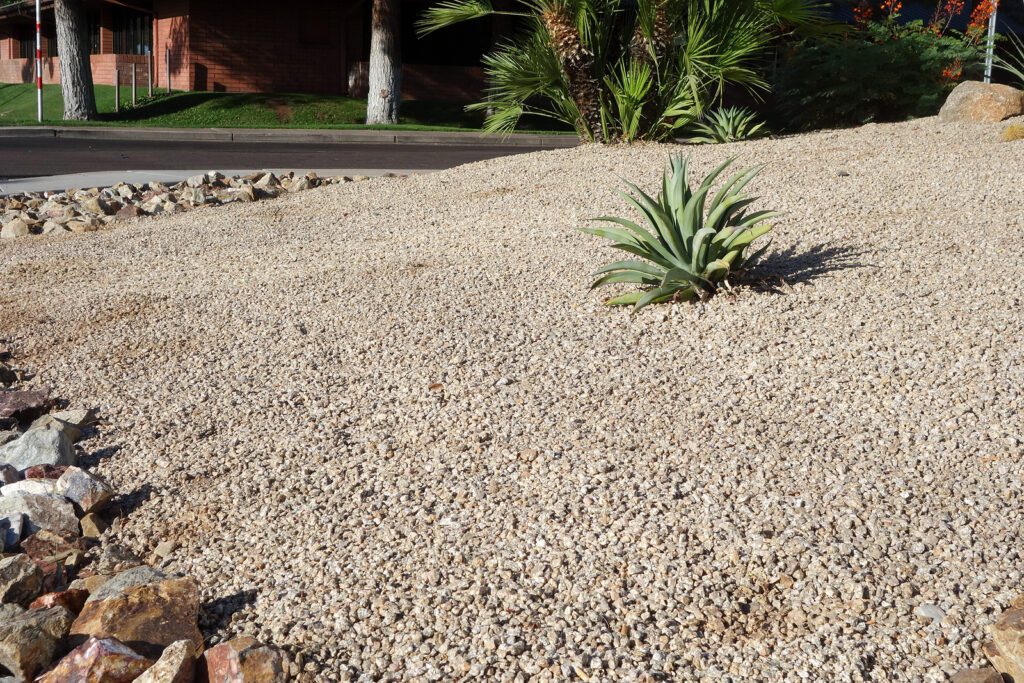
One of the biggest misconceptions about xeriscaping is that it consists mostly of cactus, succulents, and gravel mulch. While these can be used in your xeriscape garden, they are not required. Too much gravel can actually raise temperatures for surrounding plants, causing you to use even more water. Organic mulches are great alternatives that can actually retain water. As for using only cactus and succulents in your xeriscape garden, there are hundreds of plants to choose from. Not only are there many annuals and perennials that are able to thrive in your xeriscape, but there are also grasses, shrubs, and trees. Some might also think that xeriscapes use only native plants. While native plants are recommended because they can better withstand certain climates, many non-native plants can also flourish in your xeriscape landscape.
Misconception #2 – Xeriscape Gardens must be dry, rock gardens
Another misconception about xeriscapes is that they must follow a specific theme. Just because rock gardens are a popular look for xeriscapes, that doesn’t mean you can’t get creative. Xeriscapes can be whatever style you want. You can have tropical, Mediterranean, desert, grassland, desert mesa, woodland, formal, informal, or even simple designs. There are thousands of plants that can help you achieve your style and create a functional xeriscape garden.
Misconception #3 – Lawn?!? You can’t have a lawn with Xeriscaping.
Yes, you can have a lawn with xeriscaping. It doesn’t mean that you can’t have a lawn; it just means that you place and plan them wisely. Existing lawns can be scaled back, and new lawn areas can be replaced with alternative forms of turf, such as native grasses that require significantly less water. Instead of saying you can’t have a lawn with xeriscaping, say you can have less lawn with xeriscaping. Having a water-wise landscape is a great alternative to drought-parched lawns and fertiliser-guzzling annual flowers. In areas with hot, dry summers, this type of landscaping can greatly reduce your water consumption because these gardens require far less irrigation, not to mention they blend in with the surrounding landscape.
Misconception #4 – No Watering allowed!
Xeriscaping means never watering your plants again. While this is one crazy idea, some may think, xeriscaping actually encourages watering – it just means watering efficiently. Using water-efficient landscapes is one tactic of xeriscaping. Drip irrigation, productive watering practices, and water harvesting techniques are important aspects of xeriscaping. Like all plants, native plants need water to survive. Without it, they will dehydrate and die – usually quicker than from lack of other nutrients. Xeriscaping doesn’t mean you won’t water your plants; it just means you’ll water wisely.
Misconception #5 – Xeriscapes cost too much to install and maintain
Finally, some may believe that xeriscapes cost too much money. Xeriscapes can actually save you money. By designing a water-wise landscape, you can avoid costly automatic irrigation systems and weekly mowing. While some xeriscape gardens require little to no maintenance after they’re established, others require some upkeep. Some may say that xeriscapes are hard to xeriscape. Not true! Maintaining a traditional landscape can actually be more difficult than xeriscaping. Try cutting grass on a hill covered with rocks – not likely to happen. Cutting down the size of your lawn and letting native plants do the work can be easier on you and your pocketbook. Having an attractive landscape that flourishes in your region can be easy and inexpensive. Not only will you save money on water bills and maintenance, but you can also look forward to saving money on fertilizers and pesticides. Xeriscaped plants tend to be hardier than their water-guzzling counterparts. Native plants have adapted to flourish in their native region, so they don’t need chemicals to help them along. Since they require less water than traditional landscapes, many parts of your xeriscape garden will use less than half the water of established, high-water landscapes. This includes the first year after planting!