What Xeriscaping Errors Happen the Most Often?
Xeriscaping is an increasingly popular way to landscape and landscape in a sustainable, water-wise way, particularly in arid or semi-arid climates like Albuquerque’s. But just as many budding DIY landscapers can make, well, landscaping mistakes, the same is true for those new to xeriscaping. A small miscalculation or uninformed decision here and there can result in major challenges down the road.
Xeriscaping doesn’t have to be difficult and can be a fun and deeply satisfying way to green up your landscape while also saving money, time, and water. However, it is important to know what these common mistakes are and how you can avoid them. In fact, these xeriscaping mistakes are so common we have taken the liberty of listing and describing them below, along with our best tips and advice on how to avoid them so you can build the perfect xeriscape the right way.
Common Xeriscaping Mistakes
Rushing Design and Ignoring Aesthetics
The first step to a great xeriscape, whether you’re starting from scratch or converting an existing lawn, is a thoughtful plan. Many homeowners and do-it-yourself landscapers cut corners by forgoing the design stage, removing everything green, laying down some gravel, adding a cactus or two, and calling it good. This is, of course, a rookie move.
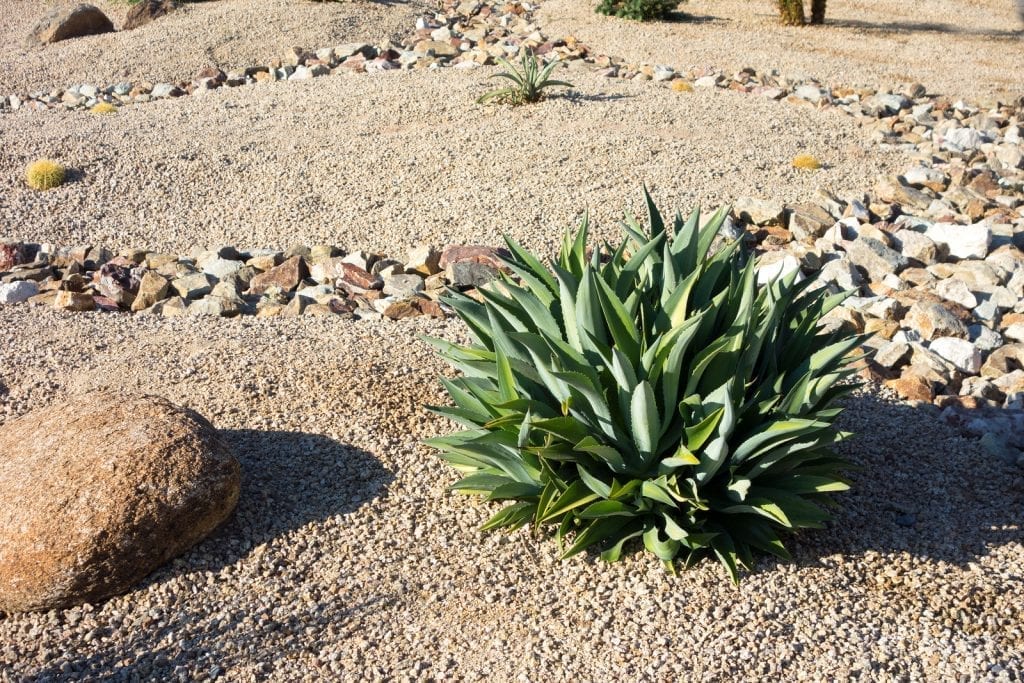
Xeriscaping can be lush, beautiful, and vibrant. The Sonoran Desert might be the most famous example of that. The desert landscape in our very own backyard has lots of color, texture, and plant variety, as well as all sorts of interesting and unusual features that many people overlook when they imagine xeriscaping. In fact, rather than designing and building a “desert wasteland,” the opposite should be your goal when planning a xeriscape.
An existing lawn may need to be removed, but removing all color, plants, and landscaping features is optional. Consider working with a landscape designer or landscape architecture firm to design a perfect xeriscape for your space that has a balanced ecosystem with enough aesthetics to make you excited about your new space.
Choosing Drought-Resistant Plants Over Native Ones
Xeriscaping means planning for survival and thriving on very little water. Native plants, especially those from the southwest, are your best bet. Don’t fall into the trap of thinking that every drought-resistant plant is native to your area. These plants might need less water, but they could also be more difficult to sustain, or at least not look the same, because of Albuquerque’s climate or soil. They might even be considered invasive!
Choose local plants instead. Native plants are better for pollinators and biodiversity, so your space will be better for the environment in addition to using far less water for maintenance. Aim for a colorful mix of heights, textures, and bloom seasons for year-round curb appeal and a dynamic xeriscape.
Replacing All the Soil with Gravel
Gravel and other natural stones look great in xeriscapes. However, replacing all of the soil in your garden or yard with gravel is a common mistake that stems from the misconception that the only plants that can survive in xeriscapes are cacti and other desert natives.
Some plants can survive (and thrive) in dry, rocky conditions. However, many others need good, rich soil to stay healthy. Get a soil pH test kit and test your soil before digging up your whole yard. You might need to replace some of your soil or at least mix in compost or mulch to provide your plants with the base they need to survive and prosper.
Just as there are drought-tolerant and low-water plants, there are also no-soil and low-soil plants. These are not xerophytes and will not work with every xeriscape design. Be sure to plan appropriately for your native plants.
Using Too Many Spiny or Waxy Plants
Another one of the most common xeriscaping mistakes is using too many plants that are considered succulents or native to the desert. While there’s nothing inherently wrong with cacti, aloe, and other drought-tolerant, desert natives, an all-succulent or all-cactus garden or yard is not necessarily a xeriscape. Rather, this look is often just plain inhospitable, unwelcoming, and in many cases uninteresting.
An ideal xeriscape should feel like an oasis in the desert or semi-desert: an area of lush foliage, shade, and beauty in the often barren landscape in which these plants and others naturally thrive. Xeriscaping is about sustainability, but you can still plan and design your garden or yard to be an oasis for humans as well as for your plants.
Mix up your cacti and succulents with a nice assortment of soft-leaved, smooth plants, such as euphorbia, bougainvillea, or some palm species. This will also help to create interesting layers and textures that keep your xeriscape visually interesting.
Expecting Xeriscaping to Require Zero Maintenance
Few people like maintaining a yard, whether it’s weekly lawn mowing, monthly landscaping maintenance, or weeding here and there. Because of this, one of the most common misconceptions among people who are new to xeriscaping is that it will require absolutely zero maintenance.
The best thing about xeriscaping is that it drastically reduces maintenance requirements when compared to a traditional lawn. However, xeriscaping does not equal “no maintenance.” The things homeowners will still need to do with a xeriscape garden or yard, even with thoughtful planning, include:
- *Occasional watering (plants, especially new ones, will need to be watered by hand, even in a xeriscape)
- Mulching
- Weeding
- Periodic pruning
The amount of maintenance your xeriscape requires will differ depending on your plant choices and layout. Plan ahead and choose plants that need very little maintenance when possible.
Skipping Mulch
Mulch is one of those xeriscaping superstars. Organic mulches such as shredded bark or other types of wood mulches are great. Inorganic mulches such as rocks, gravel, pebbles, or other stones also work well. A xeriscape will need mulch to:
- Conserve moisture
- Reduce soil erosion
- Cut back on weeds
- Protect plants’ roots
Mulching can make a xeriscape look nice and polished. It will also help your plants to stay healthy even in dry spells and droughts. Don’t skip mulch.
Misunderstanding Your Yard’s Watering Needs
The big “Light Bulb Goes Off In Your Head Moment!” when it comes to xeriscaping is the idea that you can and should water your plants, even drought-tolerant and native ones. This is because “low-water” and “zero-water” are very different. Native plants adapted to dry climates are still plants and still require water to survive, especially when they’re young.
The best choice is usually a drip irrigation system, especially for xeriscapes. Not only do drip systems deliver water directly to the root zone and keep water from evaporating or running off into other areas of your yard, they’re also easy to install and scale up when and if your yard grows.
Group your plants by their watering needs. This will ensure that all of your xerophytes are receiving the right amount of water, even as those needs change based on the weather and the time of year.
Enjoy Your Xeriscape
Xeriscaping doesn’t have to be difficult. In fact, when done right and thoughtfully, it can be a fun and deeply satisfying way to landscape your yard or garden. Save time, money, and water, and help the environment, all at the same time.
Avoid common xeriscaping mistakes, and you can enjoy your xeriscape as a beautiful, sustainable outdoor space for years to come. If you have questions, want some help with your landscape design, or simply want to make your xeriscaping experience as smooth as possible, be sure to consider working with a trusted landscaping professional like JK Outback Landscaping to enjoy the process and the result.